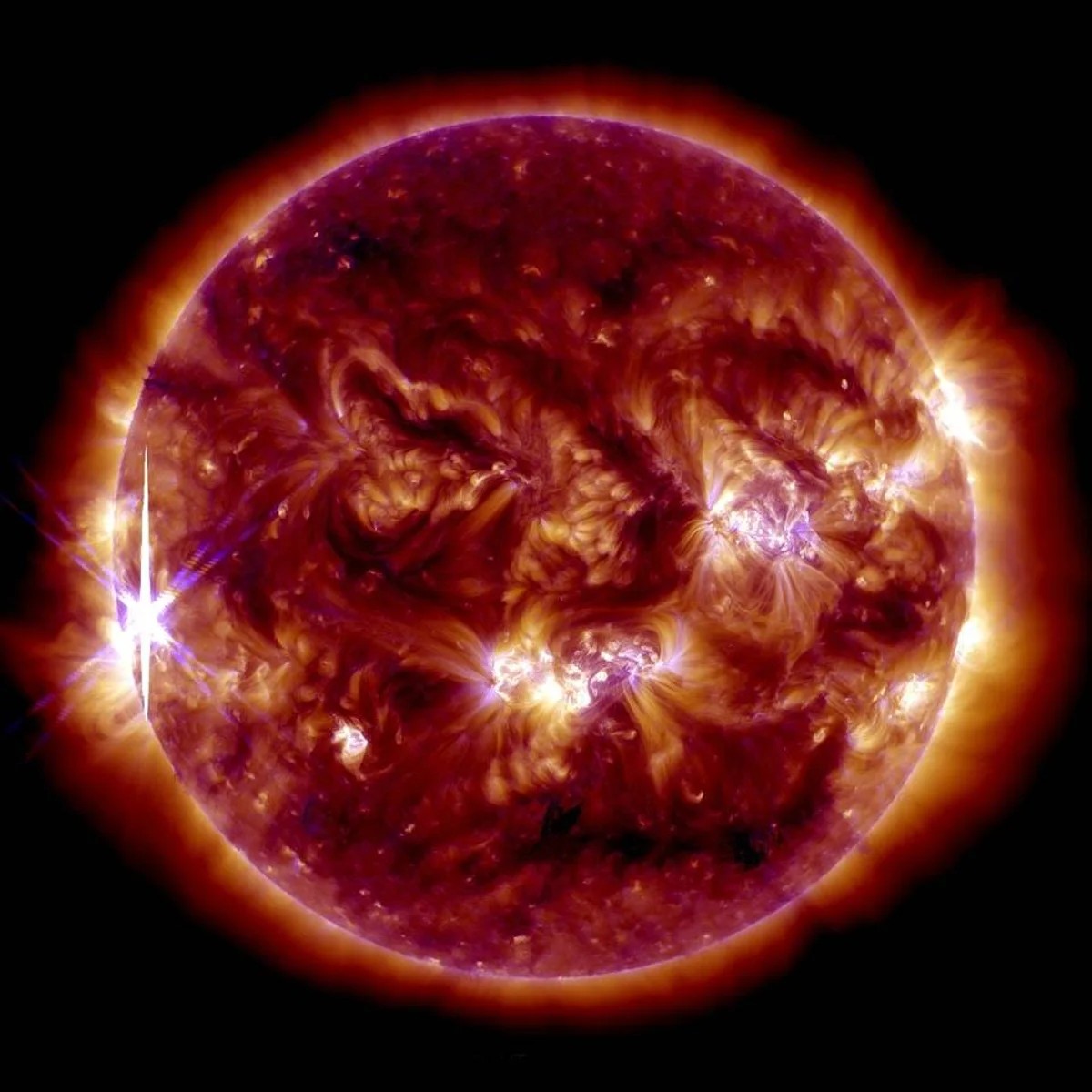
The sun has erupted with a series of exceptionally strong solar flares, including one of the most intense outbursts recorded in decades. These flares—sudden releases of energy from the sun’s turbulent surface—are a reminder that our star is far from a static, gentle presence in the solar system.
What Happened?
On Sunday, NASA’s Solar Dynamics Observatory detected multiple X-class flares, the highest category of solar events. The most powerful of these peaked at 6:37 P.M. EST, reaching an X8.1 magnitude. This makes it the brightest flare since October 2024 and places it among the top 20 strongest flares observed since 1996, according to SpaceWeatherLive.com.
The flares are a result of magnetic field lines snapping and releasing vast amounts of energy and charged particles into space. The sun’s surface is a dynamic environment of plasma constantly churned by these magnetic forces.
What Does This Mean for Earth?
The expelled plasma is expected to reach Earth around Thursday. While most of it will pass by, some particles could interact with our atmosphere, potentially triggering spectacular auroral displays (northern lights) at high latitudes. The National Oceanic and Atmospheric Administration (NOAA) is closely monitoring the active region on the sun, as further flares are anticipated.
Why this matters: Solar flares can disrupt satellite communications, GPS systems, and even power grids on Earth. The stronger the flare, the greater the potential for technological disruption.
Looking Ahead
The sun follows roughly 11-year cycles of activity, with periods of high flare frequency interspersed with calmer periods. The current cycle is proving particularly energetic, with a higher rate of X-class flares than predicted. This suggests that the coming years could see continued heightened solar activity.
The recent flare is a vivid demonstration of the sun’s raw power. While it poses some risks, it also offers a rare opportunity to witness breathtaking celestial phenomena.
The sun remains an unpredictable force in our solar system. Monitoring its activity is essential for protecting our technological infrastructure and appreciating the beauty of space weather.