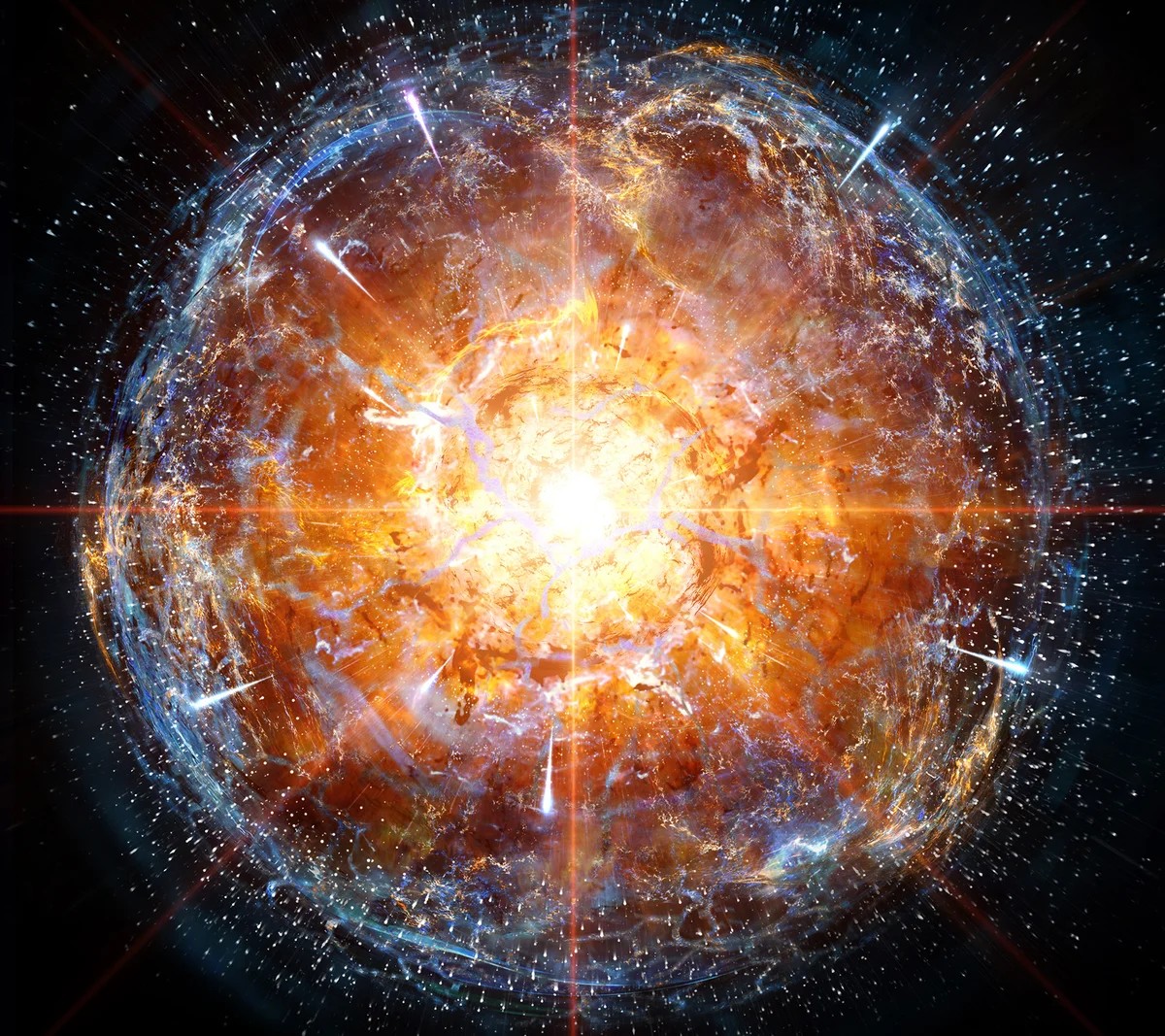
For millennia, humanity has pondered the ultimate question: what, if anything, existed before the Big Bang? Modern cosmology doesn’t offer simple answers, but it does provide frameworks for exploring the universe’s deepest origins. This isn’t just philosophical speculation; physicists are developing testable theories about what might have preceded our observable universe, even if direct observation remains impossible.
The Problem with “Before”
The Big Bang wasn’t an explosion in empty space – it created space and time itself. Asking “what came before” is, in some ways, a misnomer because the concept of “before” didn’t exist until after the Big Bang. Yet, physicists are pushing the boundaries of what can be known, testing theories about the universe’s earliest moments through indirect evidence and mathematical models.
The field has evolved from pure philosophy to rigorous science. As Jenann Ismael, a philosopher of physics at Johns Hopkins University, notes, questions once relegated to metaphysics – like the nature of time and space – are now being approached with experimental data and theoretical frameworks.
The Evolution of Cosmological Thought
For much of history, cosmology lacked solid evidence. Early theories were based on limited data. Physicist James Jeans famously quipped that the field operated on “one-and-a-half facts.” But the past century has seen a shift: philosophical questions are now being addressed with advanced theory, experimentation, and observational data.
Researchers acknowledge the inherent limitations. We may never “see” what came before the Big Bang directly, but the current and future universe may hold clues about its distant past.
Three Leading Hypotheses
Cosmologists are pursuing several potential explanations for the universe’s ultimate origins. Each requires specific, testable predictions to move beyond pure speculation.
The No-Boundary Proposal
Proposed by Stephen Hawking and James Hartle, this model suggests that time and space form a closed, four-dimensional surface. Imagine Earth’s globe: the Big Bang is the North Pole. There is no “before” it – just as there is no north of north. This concept eliminates the need for a singular beginning, framing the universe as a self-contained system.
A Bouncing, Cyclic Cosmos
Paul Steinhardt, a physicist at Princeton University, proposes a universe that undergoes cycles of expansion and contraction. Instead of a single Big Bang, our universe may have emerged from a previous contraction phase through a “big bounce.” This model avoids the need for inflation, a controversial theory requiring constant adjustments to align with observations. Crucially, it predicts that the current phase of accelerated expansion cannot continue indefinitely.
The Mirror Universe
Latham Boyle, a researcher at the University of Edinburgh, suggests that our universe is a mirror copy of another, existing before the Big Bang. Time flows forward in our universe and backward in the mirrored one. This symmetry implies that what we observe after the Big Bang is the opposite of what existed before, including matter vs. antimatter and left vs. right. This theory predicts the absence of primordial gravitational waves, a testable prediction.
The Limits of Knowing
Despite these advances, fundamental uncertainties remain. Jean-Luc Lehners, a physicist at the Max Planck Institute, is skeptical that we will ever fully understand the universe’s origins in our lifetime. Even if current theories prove correct, they may only represent a step closer to a deeper, unknowable truth.
The Scientific Process
The pursuit of these answers isn’t about definitive proof but about refining our understanding. As Brian Keating, a cosmologist at UC San Diego, emphasizes, a theory is only valuable if it produces clear, measurable predictions.
Ultimately, studying the universe’s origins is a long-term project, spanning generations. Whether we ever reach a conclusive answer remains uncertain, but the quest itself pushes the boundaries of human knowledge. The question of what came before the Big Bang may remain a mystery, but the pursuit of that answer continues to drive scientific progress.