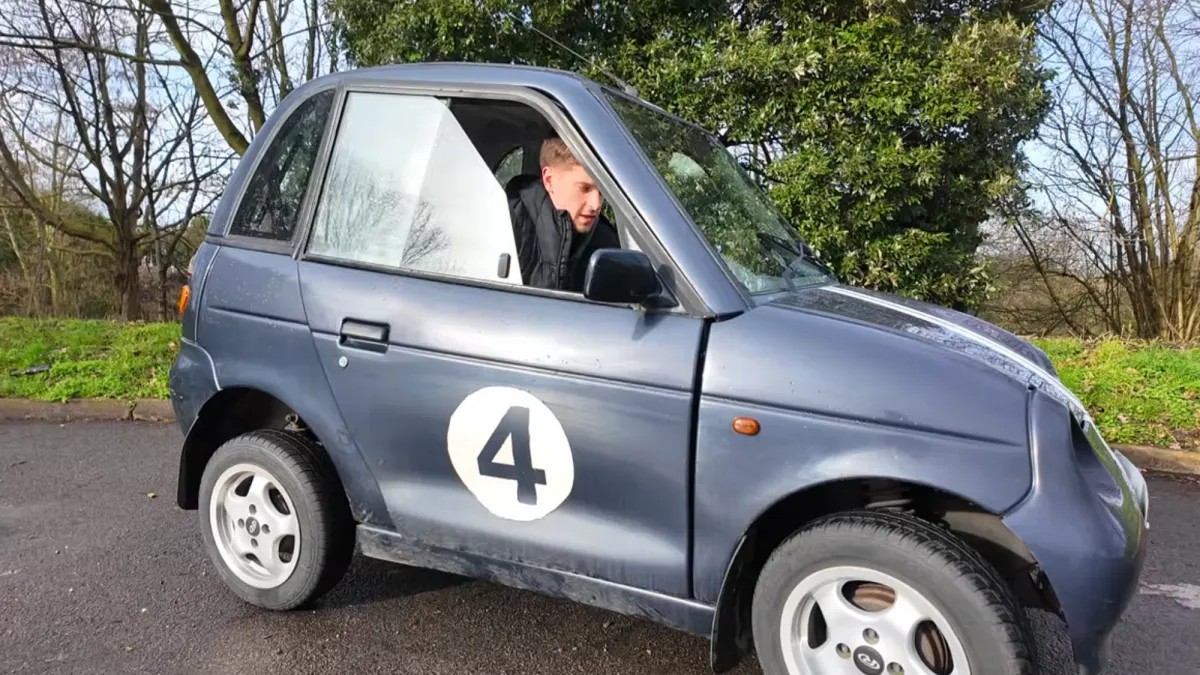
The sheer volume of disposable vapes discarded globally is staggering – an estimated 844 million in 2022 alone, with roughly 500,000 thrown away every day in 2023. Despite containing potentially reusable lithium-ion batteries, these devices contribute significantly to e-waste. One UK-based YouTuber, Chris Doel, decided to prove a point: that this waste can be repurposed. His latest experiment involved building a battery pack from over 500 discarded vapes and using it to power a fully functional electric vehicle.
From E-Waste to Energy Source
Doel’s project began with collecting vapes from music festival grounds and other littered areas. He tested the viability of each lithium-ion cell, assembling them into 14 rows of 3D-printed battery modules. This created a 50-volt, 2.5-kilowatt-hour battery pack capable of powering a Reva G-Wiz, an early 2000s EV known for its low performance.
The experiment was not just about making it work, but also highlighting the absurdity of a system that normalizes discarding rechargeable batteries. As Doel points out, “Unfortunately we seem to live in some crazy dystopia where buying these single use devices and then chucking them away is totally normalized, despite them having fully rechargeable lithium ion cells inside them.”
The G-Wiz as a Test Case
The G-Wiz was chosen specifically because of its small battery capacity. While powering a modern EV with vapes would require an impractical 12,000 cells (for a Tesla, according to Doel), the G-Wiz’s modest 17 horsepower made it a viable test subject.
Doel constructed a secure aluminum enclosure for the battery pack and integrated a battery management system with temperature probes to prevent thermal runaway – a critical safety measure, as lithium-ion batteries can catch fire if overheated. The system even included a USB-C charging port, allowing the car to be charged using a standard 138-watt laptop charger.
Testing on Public Roads
The modified G-Wiz was driven on public roads, achieving a range of 18 miles and a top speed of 40 mph. Doel documented the experiment, including a trip through a fast-food drive-through and a visit to a hardware store. Remarkably, his insurance company was aware of the modified battery setup, albeit at a higher premium.
“I bet that none of the 500 people who smoked them vapes ever expected their vapes to be literally powering my house, and now my car,” Doel stated in his video.
The Broader Implications
This experiment isn’t just about a single functioning vape-powered car; it underscores a larger issue: the unsustainable cycle of disposable electronics. It demonstrates that what is considered waste can be repurposed into a valuable energy source. Doel’s work forces a critical question: if hundreds of discarded vapes can power a car, what else are we throwing away that could have a second life? The experiment is a stark reminder that waste classification needs reevaluation.