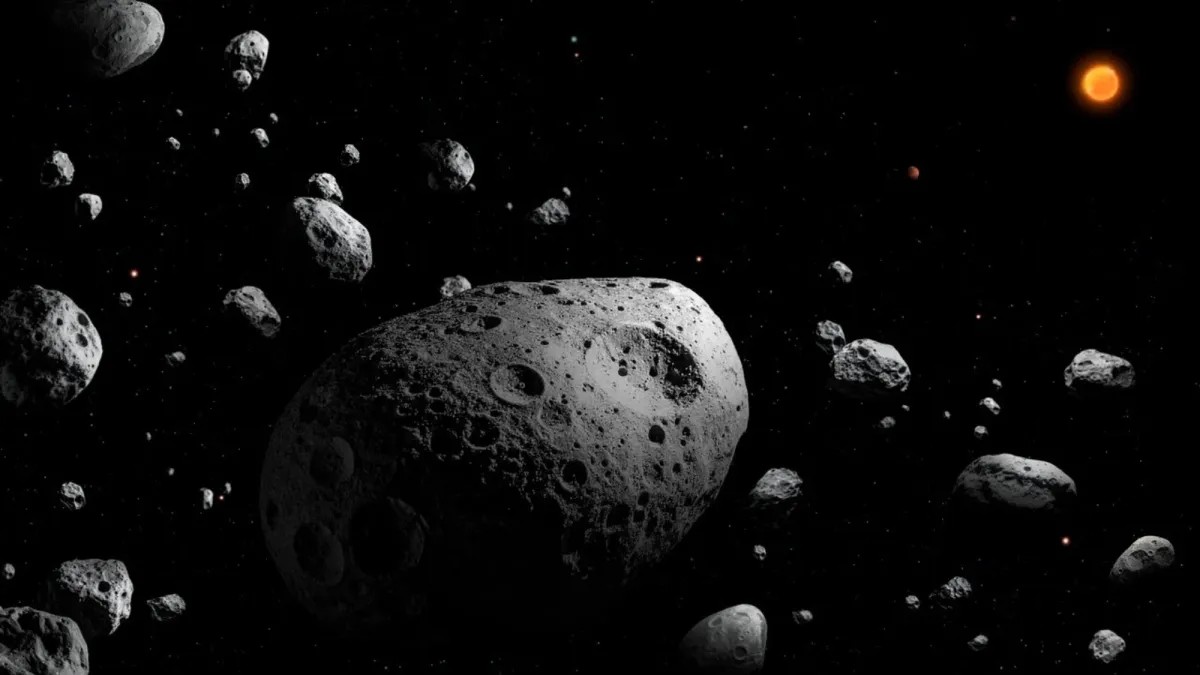
Astronomers have identified an asteroid nearly half a mile across that spins at an unprecedented rate, offering new insights into the formation and composition of asteroids. The discovery was made possible by the world’s largest digital camera, part of the Vera C. Rubin Observatory currently undergoing testing in Chile. The findings were published in The Astrophysical Journal Letters.
Why This Matters
The rapid rotation of this asteroid, designated 2025 MN45, suggests it’s unusually solid for its size. Most asteroids are loosely held together “rubble piles,” but this one must have significant internal strength to avoid breaking apart at such speeds. Studying these exceptions is crucial, as they help scientists understand how asteroids form, collide, and evolve over billions of years.
Key Findings: A Super-Fast Space Rock
Asteroid 2025 MN45 completes a full rotation in just 1.88 minutes – the fastest spin rate ever recorded for an asteroid exceeding 500 meters (1,640 feet) in diameter. The team identified the asteroid using the 3,200-megapixel LSST Camera, capable of capturing an image every 40 seconds. Preliminary observations in June 2025 alone revealed 1,900 previously unknown asteroids.
What Spin Rate Tells Us
An asteroid’s spin speed provides vital clues about its history. Fast rotation often indicates a past collision with another asteroid, potentially fragmenting a larger object. If an asteroid spins too quickly, it risks flying apart unless its core material is strong enough to withstand the centrifugal force.
The study identified 76 asteroids with reliable rotation periods, including 16 “super-fast rotators” spinning between 13 minutes and 2.2 hours. Three were classified as “ultra-fast,” completing a full rotation in under five minutes. These findings challenge existing assumptions about asteroid composition.
The Rubin Observatory: A New Era of Discovery
The Vera C. Rubin Observatory is designed to conduct a 10-year Legacy Survey of Space and Time (LSST). It will repeatedly scan the sky, creating an ultra-high-definition time-lapse record of the universe. This will allow for systematic observations of asteroids and other celestial bodies, providing a wealth of data previously unavailable.
“NSF–DOE Rubin Observatory will find things that no one even knew to look for,” said Luca Rizzi, an NSF program director.
The discovery of 2025 MN45 is just a preview of the data expected from the LSST. Astronomers anticipate uncovering more fast-rotating asteroids, shedding light on the physical properties and origins of these primitive cosmic bodies.
The strength of this asteroid suggests it may be composed of solid rock rather than the more common “rubble pile” material. This discovery raises questions about how such strong asteroids form and survive in the asteroid belt.