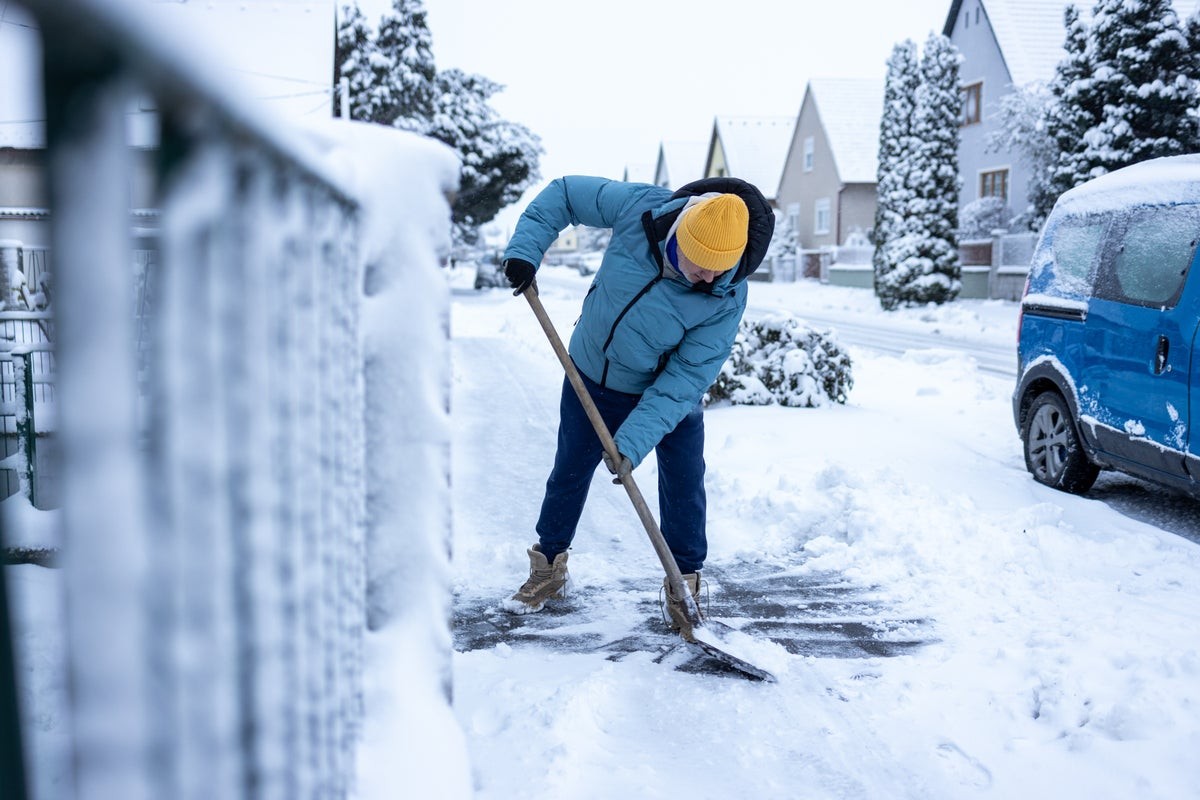
The next time a blizzard hits, don’t just curse the snow; consider the strange math behind why anyone bothers shoveling at all. A seemingly simple scenario—two cars stuck in a snowdrift, each with a shovel—reveals a surprisingly complex question about human cooperation. This isn’t just about clearing roads; it’s about understanding why we work together when pure self-interest suggests we shouldn’t.
The Prisoner’s Dilemma in the Snow
The core of the issue stems from a variation of the classic prisoner’s dilemma in game theory. Two individuals face a choice: cooperate for mutual benefit, or betray the other for personal gain. If both cooperate, the outcome is moderate success for both. If one betrays while the other cooperates, the betrayer wins big. But if both betray, everyone loses.
The snowdrift problem applies this to a real-world scenario: two drivers, each capable of shoveling their way out of a snowdrift. The most selfish outcome is convincing the other driver to do all the work while you reap the rewards. The next best is both shoveling together. But even if your neighbor refuses to cooperate, you’re still better off shoveling yourself – at least you’ll get where you’re going.
Why We Still Work Together
Despite this logic, humans cooperate far more than game theory predicts. Experiments show the snowdrift scenario yields more cooperation than the prisoner’s dilemma, suggesting it’s a better model for real-world interactions. Why? Unlike the prisoner’s dilemma, where betrayal has minimal impact on the betrayer, in the snowdrift, refusing to help also hinders your own progress.
This makes cooperation more appealing. Studies suggest that observing others cooperate (“poor-defect-rich-cooperation”) encourages reciprocity. If your neighbors are shoveling, you’re more likely to join in. This isn’t altruism; it’s a calculated move for mutual benefit.
The Bigger Picture
The snowdrift problem highlights a fundamental paradox: natural selection favors selfishness, yet cooperation is pervasive in the animal kingdom and in human society. Understanding how selfish individuals create functional societies is a key goal in evolutionary biology and behavioral economics. Simple models like this help scientists explore this puzzle using math, offering insights into why we collaborate even when it’s not strictly rational.
Cooperation isn’t just a moral choice; it’s a pragmatic one. In the snowdrift, as in many aspects of life, helping others often means helping yourself.
The next time you find yourself digging out from a blizzard, remember: it’s not just about the snow. It’s about the invisible forces that keep us working together, even when we’d rather not.