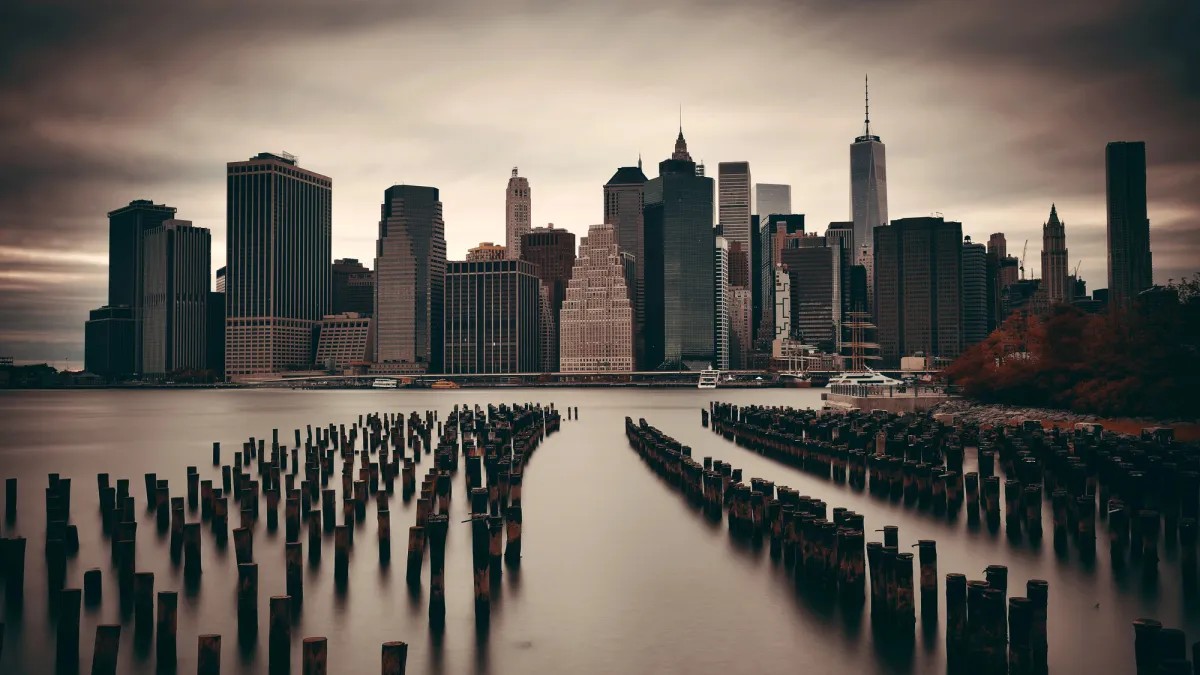
New York City, one of the world’s most densely populated and relentlessly noisy urban centers, presents a stark thought experiment: what happens when eight and a half million people vanish overnight? The answer, according to urban ecologists and architects, is surprisingly rapid deterioration followed by aggressive natural regrowth. This isn’t just a hypothetical scenario; abandoned cities throughout history, from Pripyat after Chernobyl to the ancient metropolis of Cahokia, demonstrate nature’s relentless efficiency at reclaiming territory.
The First Days: Silence, Darkness, and Decay
Within days of complete human absence, New York would fall silent. The power grid, unmaintained, would fail almost instantly, plunging the city into darkness. This isn’t merely an inconvenience; it sets off a cascading series of failures. Temperatures would swing wildly, and moisture would begin to seep into buildings. Mold would appear within a week, and the subway system, dependent on constant pumping to remove 13 million gallons of water daily, would flood, becoming an instant haven for rats, cockroaches, pigeons, and opossums.
The Years of Erosion: Structural Collapse and Animal Infiltration
Over years, the city’s infrastructure would crumble. Single-pane windows in older buildings would crack, allowing moisture and eventually plant life to take hold. Even modern skyscrapers, often perceived as indestructible, are vulnerable. Their reinforced glass facades would succumb to the elements, corroding steel beams and accelerating decay. Surprisingly, older structures like the Empire State Building, overbuilt by design, would fare better initially, but even they are not immune to eventual collapse. Animals would colonize these spaces: deer, rabbits, turkeys, and predators like snakes and bobcats would move in as ecosystems re-establish.
A Century of Rewilding: Forests Among Skyscrapers
Within a century, New York City would be unrecognizable. Trees would sprout from asphalt cracks, Central Park would become a young forest, and buildings would be draped in moss. The Hudson and East River parks would transform into wetlands teeming with wildlife. The city’s very foundations would dissolve as soil regenerates and concrete breaks down.
The Long View: Echoes of Humanity
Even after centuries, traces of human presence would endure. Rusted steel beams, rubble piles from collapsed structures, and even the stone lions guarding the New York Public Library could remain for millennia, offering future archeologists clues to a lost civilization.
The rapid collapse of a modern metropolis like New York highlights a fundamental truth: even the most imposing human constructions are temporary against the forces of nature. While total abandonment is unlikely, this thought experiment reveals how fragile our dominance truly is. The city would not simply decay; it would be reclaimed, a stark reminder that even the most enduring legacies of humanity will eventually return to the wild.