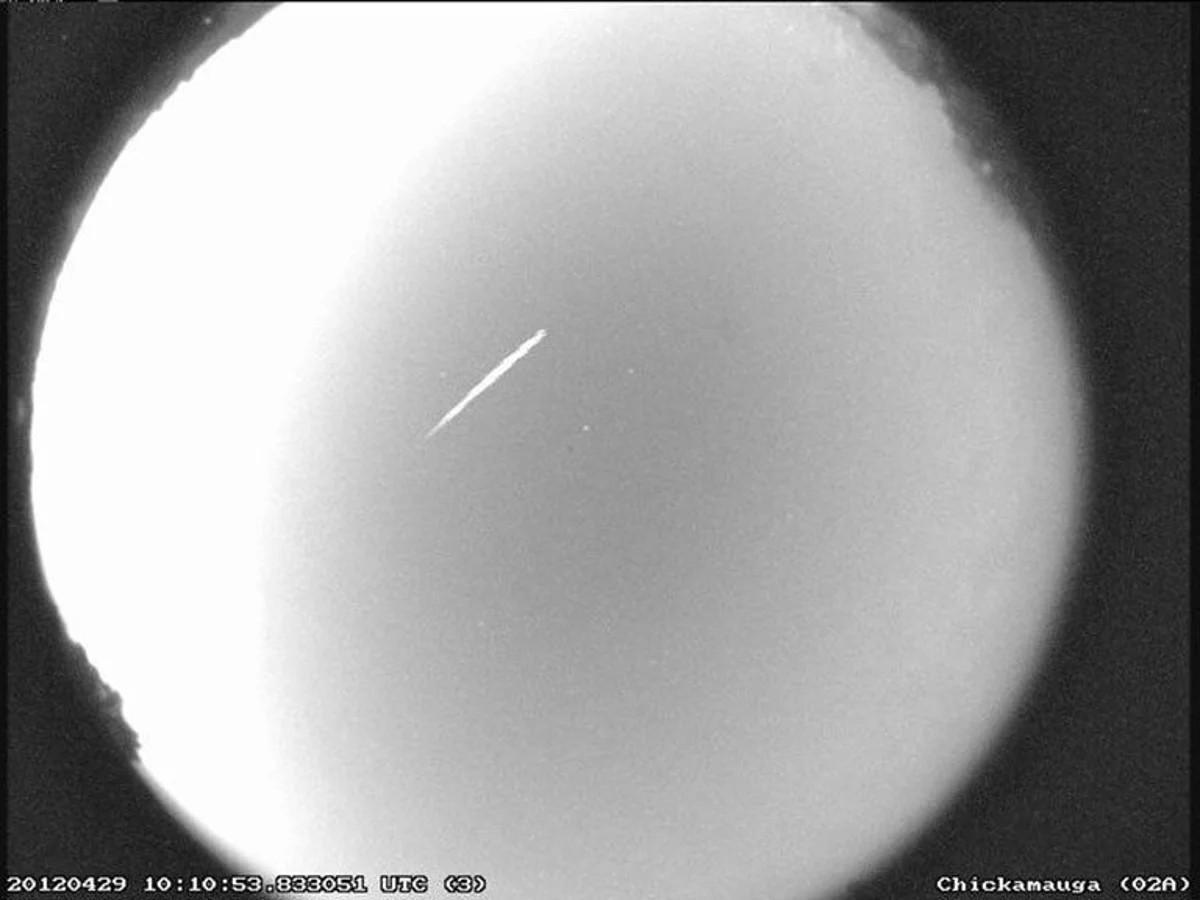
The Eta Aquarid meteor shower reaches its peak activity tonight, May 5, continuing through the early hours of May 6. For skywatchers in the Northern Hemisphere, this annual celestial event offers a chance to witness some of the fastest and most visually striking meteors of the year.
While the shower promises up to 50 meteors per hour under ideal conditions, observers should manage their expectations regarding visibility. This year, the bright moonlight may wash out fainter streaks, making the brighter, faster-moving meteors the primary highlight of the show.
The Speed and Spectacle of the Eta Aquarids
What sets the Eta Aquarids apart from other showers is their velocity. These meteors strike Earth’s atmosphere at approximately 40 miles per second (about 18 kilometers per second). This high speed creates a distinctive visual effect: the meteors often leave behind glowing trains or trails that linger for a fraction of a second after the initial flash of light.
This phenomenon occurs because the debris is traveling so fast that it doesn’t burn up instantly. Instead, it creates a prolonged ionization trail that remains visible to the naked eye, adding a dramatic flair to the night sky.
A Legacy of Halley’s Comet
The Eta Aquarids are not random space junk; they are the cosmic residue of Halley’s Comet (1P/Halley). As Earth orbits the Sun, it passes through the stream of dust and rock left behind by the comet during its last visit to the inner solar system.
The shower is named after Eta Aquarii, the brightest star in the constellation Aquarius, which serves as the “radiant point”—the area in the sky from which the meteors appear to originate. However, the source is distinctly Halley’s Comet, named after the 18th-century astronomer Edmond Halley. In 1705, Halley used Isaac Newton’s laws of gravity to prove that the comet was periodic, returning every 76 years.
The Eta Aquarids serve as an annual reminder of Halley’s Comet’s passage, allowing us to witness the comet’s legacy even when the comet itself is out of view.
Halley’s Comet has been a fixture in human history for millennia. The earliest recorded sighting dates back to Chinese astronomers in 240 B.C.E. Perhaps its most famous historical appearance was in 1066 C.E., when it was seen over England. Contemporary observers interpreted it as an omen of doom for King Harold II, who was subsequently defeated by William the Conqueror at the Battle of Hastings. This event was immortalized in the Bayeux Tapestry, linking the comet to one of the most pivotal moments in medieval European history.
Why This Matters Now
The last time Halley’s Comet made a close approach to Earth was in 1986, a visit that sparked significant scientific interest. During that window, the European Space Agency’s Giotto spacecraft, along with probes from the Soviet Union and Japan, captured detailed images of the comet’s nucleus. These missions revolutionized our understanding of cometary composition, revealing them to be “dirty snowballs” of ice, dust, and rock.
It has been 40 years since that close encounter, and Halley’s Comet will not return to the inner solar system until 2061. In the interim, the Eta Aquarid shower offers a tangible connection to this historic object. By watching the shower, observers are literally looking at the debris field of a comet that has shaped human culture and scientific inquiry for centuries.
How to Get the Best View
To maximize your chances of seeing the shower, preparation is key. The Eta Aquarids are best observed from the Northern Hemisphere during the pre-dawn hours of May 5 and May 6.
Follow these steps for optimal viewing:
- Find Darkness: Locate a spot far from city lights. Light pollution is the biggest enemy of meteor watching.
- Let Your Eyes Adjust: It takes approximately 20 minutes for your eyes to fully adapt to the dark. During this time, avoid looking at phone screens or other bright lights.
- Look East: Since the radiant point is near Aquarius, facing east before sunrise will align you with the path of the meteors.
- Be Patient: Meteors can appear anywhere in the sky, not just near the radiant point. Lie back, relax, and let your gaze sweep across the heavens.
Conclusion
The Eta Aquarid meteor shower is more than just a seasonal light show; it is a direct link to one of the solar system’s most famous visitors. While this year’s moonlight may dim the fainter meteors, the fast-paced, trailing streaks of Halley’s Comet’s debris remain a spectacular reminder of our dynamic place in the cosmos.