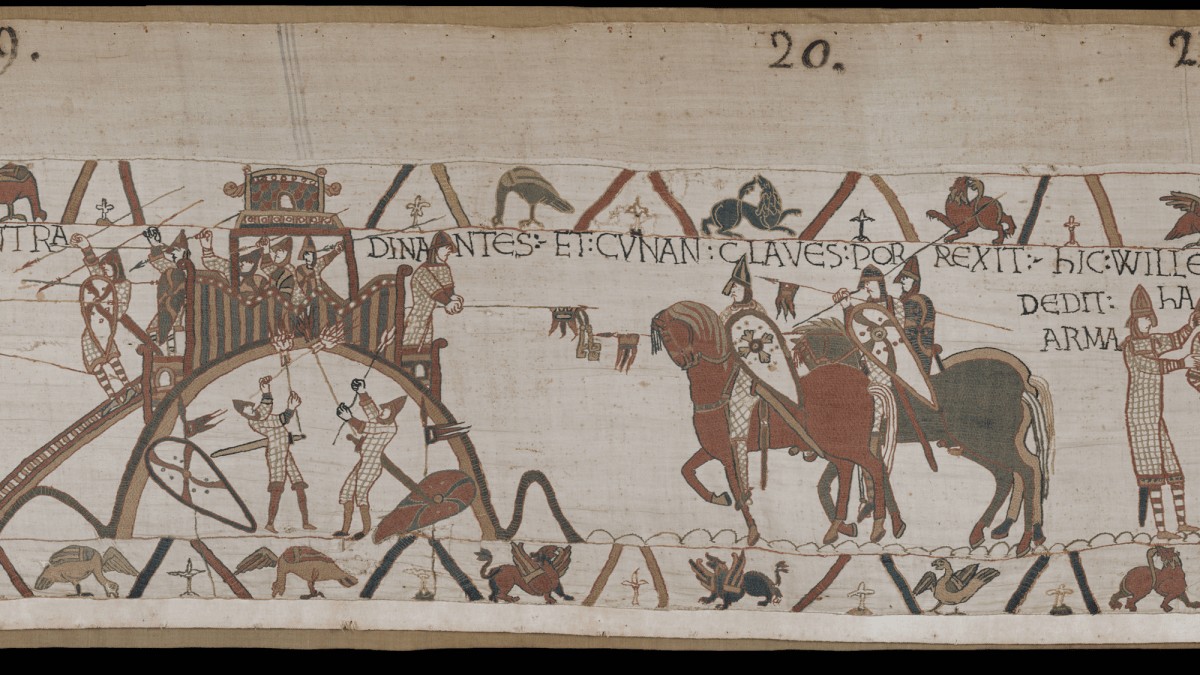
For generations, the story of King Harold’s desperate 200-mile land march to the Battle of Hastings in 1066 has been a cornerstone of English history. Depicted even on the famed Bayeux Tapestry, the narrative portrays Harold dismissing his navy and rushing his exhausted troops across the country to confront William of Normandy. However, recent scholarship suggests this iconic march never actually happened.
The Misunderstood Chronicle
The misconception stems from a long-standing misinterpretation of the Anglo-Saxon Chronicle, one of the earliest and most detailed records of English history. Since the Victorian era, a line stating Harold’s ships “came home” has been taken to mean he disbanded his fleet after the Battle of Stamford Bridge. But as medievalist Tom Licence of the University of East Anglia points out, this is a mistake. Contemporary sources indicate Harold ordered his ships to defend England against William’s invasion.
Licence’s meticulous analysis of nine surviving Chronicle manuscripts, along with other 11th-century texts, reveals no mention of a grueling land march. Instead, the evidence suggests Harold’s fleet played a crucial role in both defending the southern coast and supporting his campaign against Harald Hardrada. After Stamford Bridge, the ships repositioned to confront the Norman forces.
A Coordinated Land-Sea Campaign
This reevaluation fundamentally alters our understanding of Harold’s strategy. Rather than a frantic dash across England, his campaign was a sophisticated land-sea operation. Harold wasn’t a reactive, exhausted commander; he was a tactician who leveraged England’s naval power to wage a coordinated defense.
The implications are significant. Historians have long assumed Harold’s defeat at Hastings was inevitable due to his hasty march. Now, with the myth debunked, we see a more capable leader who strategically utilized all available resources.
Why It Matters
The persistence of the false march narrative is a testament to how easily historical “facts” can become entrenched. This matters because it obscures the actual military capabilities of a king whose reign dramatically shaped England. As current Hastings battlefield curator Ray Porter notes, the revised timeline aligns with Harold’s known tactics, including previous campaigns that demonstrate his reliance on naval transport.
Logically, the idea of a seasoned commander forcing thousands of troops to march 200 miles in ten days before a crucial battle is implausible. The availability of ships makes a land march not only unnecessary but militarily unsound.
“Only a mad general would have sent all his men on foot if ship transports were available,” Licence argues, summarizing the absurdity of the long-held belief.
Ultimately, correcting this historical misunderstanding offers a more accurate and nuanced picture of King Harold’s leadership and England’s defenses in 1066.