


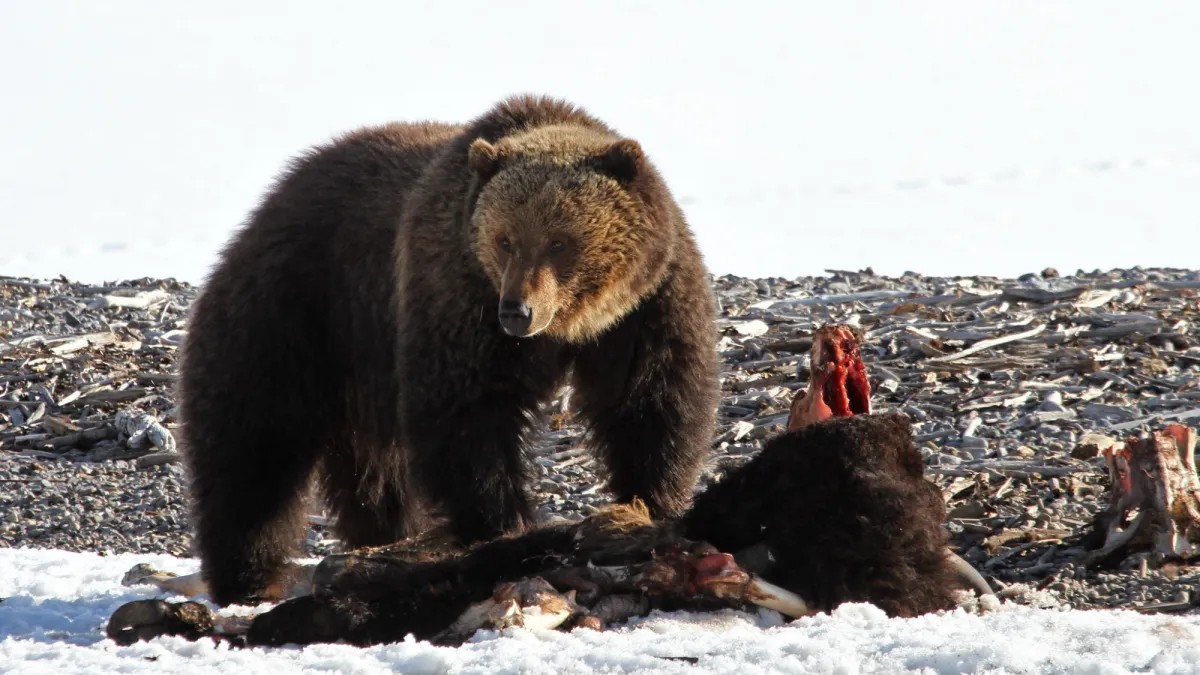
Yellowstone National Park has confirmed the first grizzly bear sighting of 2026, marking a key moment in the ecosystem’s seasonal transition. The bear, observed on March 9th, was scavenging on a bison carcass in the park’s backcountry, signaling the start of increased bear activity as they emerge from winter dormancy.
Why This Matters: Bear Behavior and Park Safety
This first sighting isn’t just about one bear; it’s an indicator of the broader cycle of life in Yellowstone. Bears enter a state called torpor – not true hibernation – relying on fat reserves accumulated over the summer. The emergence timing for males in early March is typical, with females and cubs following in April-May.
The key takeaway for visitors is simple: Yellowstone is bear country. Both grizzly and black bears coexist in this region, making awareness and caution essential. Encounters are possible anywhere in the park, even near popular landmarks.
Understanding Bear Torpor and Seasonal Changes
Bears don’t truly hibernate like some small mammals. Instead, they enter torpor, a deep sleep state triggered by food scarcity. Unlike rodents that store food, bears rely on fat reserves built up during warmer months – sometimes reaching 30% of their body weight. This preparation is so vital that Katmai National Park in Alaska even celebrates it with “Fat Bear Week.”
The timing of emergence is also shifting slightly. The first sighting in 2025 was March 14th, and in 2024, it was March 3rd. These minor changes, though not drastic, show how environmental factors can influence animal behavior.
Essential Safety Guidelines for Visitors
To ensure both your safety and the bears’ well-being, follow these guidelines:
- Carry bear spray: And know how to use it.
- Travel in groups: Three or more people are ideal.
- Stay on marked trails: And make noise while hiking.
- Avoid peak risk times: Dusk, dawn, and nighttime hikes should be avoided.
- Never run: If you encounter a bear, remain calm and slowly back away.
- Maintain distance: Stay at least 100 yards away from bears. Use binoculars for better viewing.
- Store food securely: Use vehicles or bear-proof containers.
- Report sightings: Inform park rangers immediately of any bear encounters.
The annual emergence of Yellowstone’s grizzlies is a powerful reminder that wildlife management, visitor safety, and ecological awareness must go hand in hand.
This first sighting is a clear signal that spring is arriving in Yellowstone, but it also reinforces the need for preparedness and respect for the park’s wild inhabitants.


