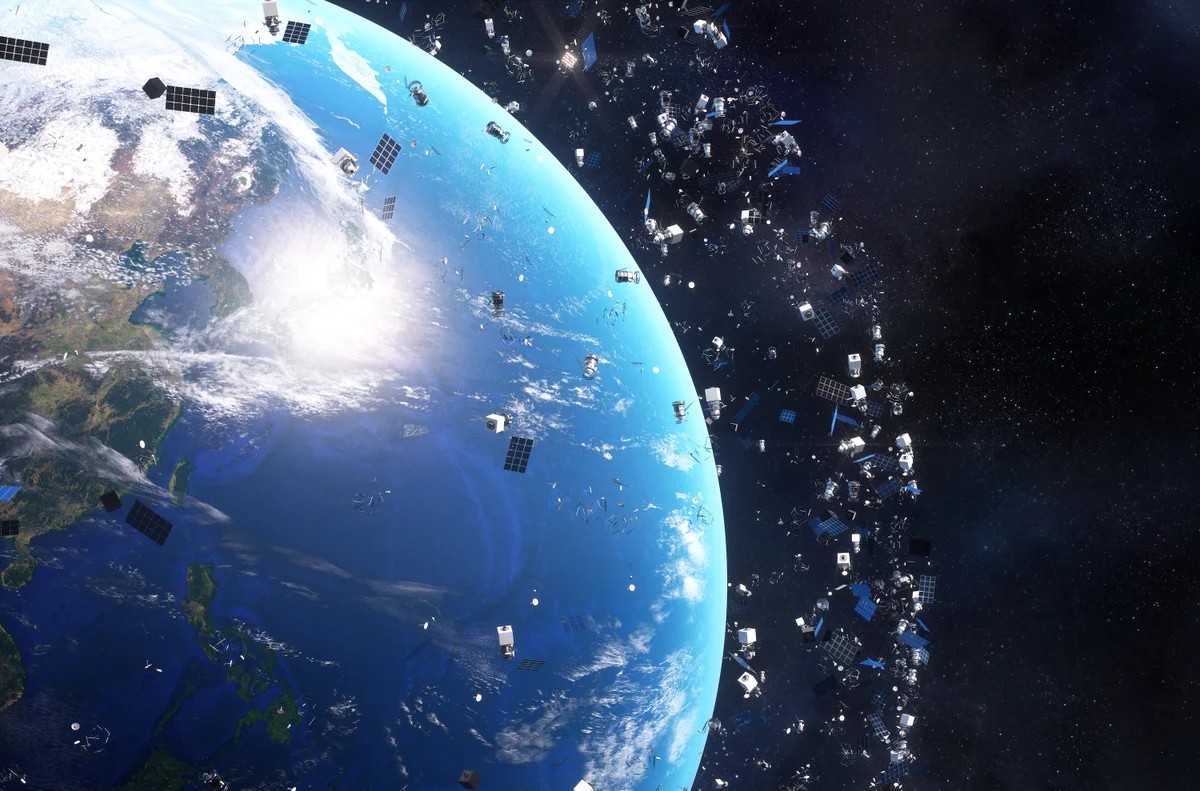
The space around Earth is becoming dangerously crowded, and the window for avoiding catastrophic satellite collisions is shrinking rapidly. Decades of rocket debris, defunct satellites, and weapon tests – coupled with the explosive growth of massive satellite constellations – mean operators now have mere days, not months, to react to potential impacts.
The Shrinking Reaction Window
Astronomer Aaron Boley of the University of British Columbia and his colleagues have developed a “CRASH Clock” metric to illustrate this escalating problem. Their research, available as a preprint on arXiv.org, shows that the time available to avoid a serious collision has plummeted.
In January 2018, satellites had an average of 164 days to react to a concerning close pass. By June 2025, that window has narrowed to just 5.5 days. This means an average satellite in low-Earth orbit now faces a 17% chance of a collision-causing close approach within 24 hours, forcing far more frequent evasive maneuvers.
Why This Matters
The rapid decline in reaction time is directly linked to the rise of “mega constellations” like SpaceX’s Starlink, which launched its first satellites in 2019. This isn’t just about more satellites; it’s about the exponential increase in potential collisions. With over 9,000 Starlink satellites currently active (representing roughly two-thirds of all satellites), the probability of incidents rises dramatically. Amazon’s Project Kuiper and Chinese companies are also rushing to deploy similar constellations, further exacerbating the issue.
The Kessler Syndrome Risk
The problem isn’t just about individual crashes. The more collisions occur, the more debris is created, triggering a cascading effect known as Kessler-Cour-Palais Syndrome. This could render certain orbits unusable, crippling essential space infrastructure.
“The biggest driver is simple arithmetic: far more satellites in the same orbital bands means far more close approaches, and the screening and response workload grows extremely fast.”
— Aaron Rosengren, University of California, San Diego
Coordination Challenges
Avoiding disaster requires unprecedented coordination among independent organizations that use different tracking tools and don’t always share data effectively. Recent near misses—including a 2019 incident where a European Space Agency satellite dodged a SpaceX Starlink due to a communication bug, and a recent SpaceX vehicle nearly colliding with a Chinese satellite—highlight the vulnerability of the current system.
The Future Outlook
The situation is likely to worsen as companies and governments continue launching satellites, and even explore ambitious projects like orbital space mirrors and data centers. The CRASH Clock isn’t just a statistic; it’s a warning that the orbital environment is approaching a tipping point. Without significant improvements in coordination and collision avoidance strategies, the risk of catastrophic failure will only increase.
The trend is clear: space is getting crowded, and the margin for error is vanishing.