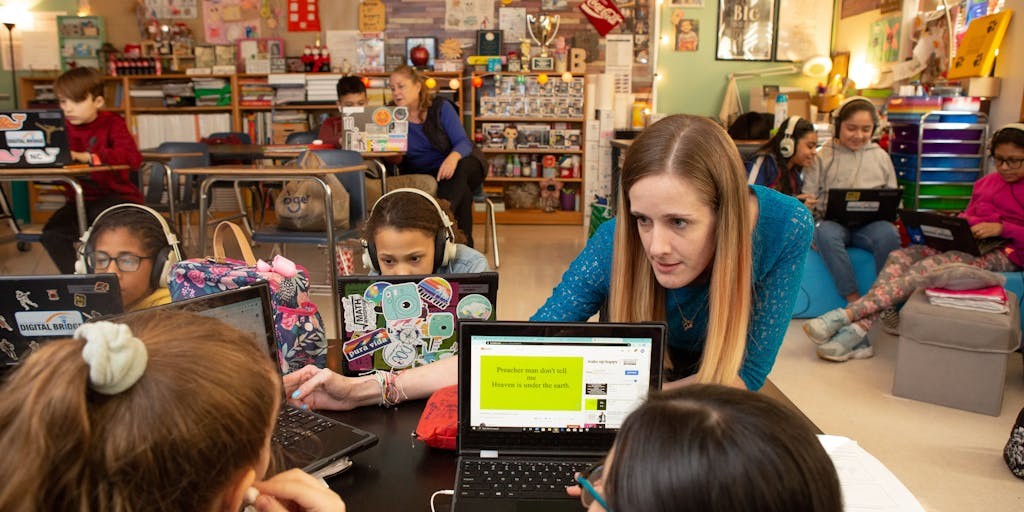
A decade after many schools adopted widespread device programs – assigning laptops or tablets to every student – policymakers and advocates are beginning to question the long-term effects. What started as a pandemic-driven necessity has morphed into a pervasive reliance on screens, prompting some to call for a rollback, particularly at younger ages where distractions are most potent.
The Rise of “One-to-One” and the Unforeseen Consequences
The push for digital learning accelerated during COVID-19, fueled by federal funding and the urgent need for remote instruction. While intended to bridge educational gaps, this rapid adoption left little room for careful consideration of the drawbacks. Kate Blocker, director of research at Children and Screens, points out the initial promise of improved learning and efficiency hasn’t fully materialized. The question now is whether these benefits justify the costs.
The concern isn’t about eliminating technology entirely, but rather mitigating its unintended consequences. Angela Duckworth, a leading educational psychologist at the University of Pennsylvania, uses a blunt analogy: “You don’t tell smokers to sit next to a pack of cigarettes. You tell them to remove themselves from temptation.”
Distraction and Data: The Core Issues
Federal data shows 90% of public schools now operate under a “one-to-one” program by the 2024–25 school year. However, research suggests these devices are becoming a significant distraction. A recent study led by Duckworth found that teachers estimate one in three students use laptops during class for non-academic purposes, like texting or social media. The problem isn’t just phones; laptops allow students to appear engaged while doing otherwise.
Beyond distraction, there are growing concerns about student data collection. Many edtech companies amass vast amounts of information, raising questions about privacy and security. The lack of clear oversight and regulation adds to this unease.
Artificial Intelligence Adds Urgency
The rapid emergence of generative AI has further intensified the debate. Unlike previous technology integrations, AI arrived on devices, forcing schools to react rather than proactively plan. This has exacerbated existing concerns, pushing legislators to re-evaluate their reliance on edtech.
State-Level Action and Proposed Solutions
Roughly nine states are now considering “Safe Schools Technology” legislation, driven by advocates like Kim Whitman of the Distraction-Free Schools Policy Project. The goal isn’t a ban, but rather a framework for limiting inappropriate or ineffective tech use. Proposals range from limiting screen time in elementary schools to allowing parents to opt their children out of device use entirely.
Some leaders in Kansas propose banning hardware in elementary schools, while allowing shared-device models in middle school. The conversation extends to edtech itself, with calls for the same rigorous certification standards applied to traditional curricula. The central question remains: who is responsible for verifying safety and effectiveness – schools, companies, or independent third parties?
Equity and Access: A Complicated Reality
Implementing such changes is not without challenges. Many low-income districts rely on digital devices due to their lower cost compared to textbooks. Furthermore, they may have already invested heavily in edtech through grants and federal funds. Reducing device reliance risks exacerbating existing educational disparities.
Carrie James of Harvard’s Center for Digital Thriving emphasizes the importance of considering neurodivergent students, for whom digital tools can be essential for learning. A blanket ban risks excluding those who benefit most from technology-assisted education.
The Path Forward: Nuance Over Bans
Experts suggest that outright bans are unlikely to be the most effective solution. Blocker argues that while phone bans are straightforward – limiting interference with learning – edtech requires a more nuanced approach. The evidence suggests that, when used effectively, it can benefit older students.
Whitman believes device bans will eventually gain traction as parents become more aware and organized. James, however, urges schools to focus on holistic integration, building agency and intentionality around technology use. The ultimate goal should be to prepare students for a world where digital access is ubiquitous, not simply restrict it within school walls.
The discussion around technology in schools is not about whether to use it, but how to use it responsibly and equitably, ensuring that it enhances learning without undermining student focus or compromising their privacy.