The Organ in the Gut
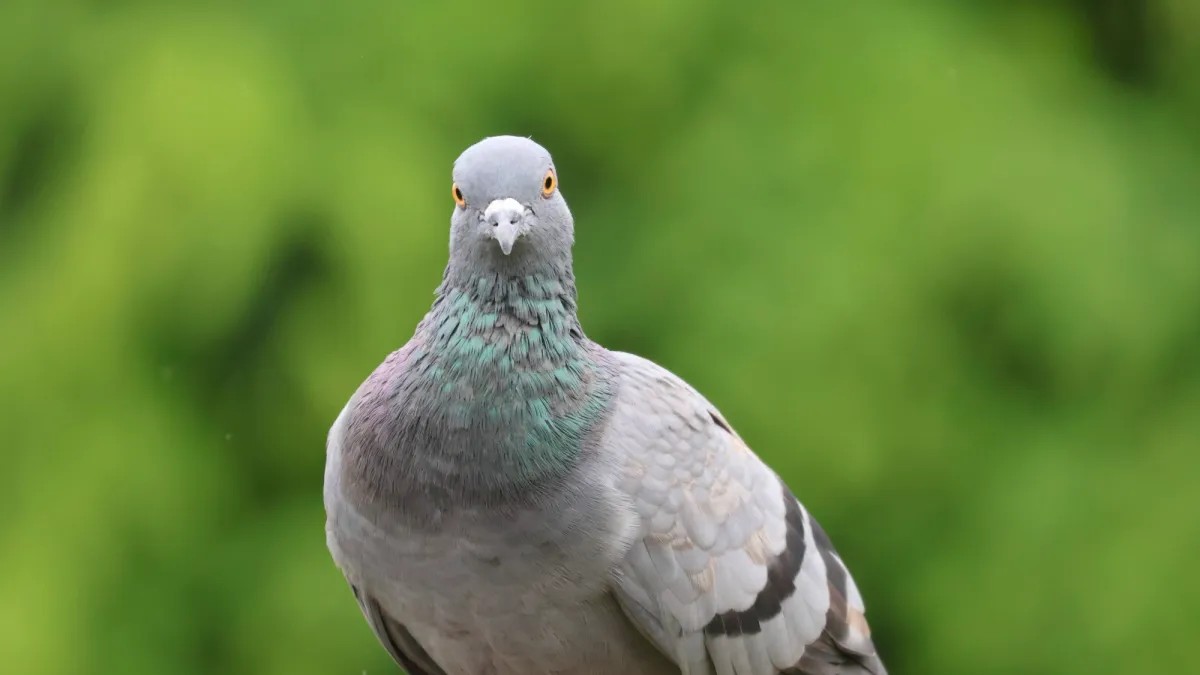
Decades of confusion. That is the scientific record on bird navigation. We knew pigeons used Earth’s magnetic field to fly home. We did not know how. The mechanism was invisible. A black box.
Until now.
A new study in Science points to a surprisingly humble spot. The liver. Specifically, immune cells inside it. These are called macrophages. They hang out there to eat old red blood cells. That job piles iron into their systems.
Iron creates magnetism.
Not just any magnetism, but a specific type. The researchers call it superparamagnetism. It happens at the nanoscale. Tiny particles become magnetized when the field hits them.
“When pigeons fly,” Clivia Lisowski, a researcher at the University of Bonn, told Popular Science. “The nanoparticles align… they become ‘magnetized’.”
She says the bird essentially turns its liver into a sensor. Like a compass. Buried inside.
Lost in the Clouds
How did they prove it?
Ulf Wiedwald, a nanoscience expert from the University of Duisburg-Essen, led the team. He guessed the liver or spleen were prime candidates. Why? Those organs store the most iron. Turns out he was right about the liver. Its magnetic signal was significantly louder than any other tissue they checked.
They didn’t stop there. They zeroed in on the macrophages themselves. Then they put the pigeons to the test.
Standard homing training. Release the birds 12.4 miles from their aviary in Germany. Send them home.
Here is where it got weird.
If the sky was sunny? No problem. The birds found home. Probably using the sun. Standard procedure for avian navigation.
If the sky was overcast?
Chaos.
Pigeons that had their magnetic macrophages removed got lost. Completely disoriented. They relied on the magnetic field when the visual cues failed. When you remove that specific iron-heavy cell line, you blind them to the magnetic map.
More Than Just Birds
Why does this matter outside of pigeon racing?
Lisowski sees a broader application. Maybe sharks. Bats. Birds migrating in total darkness at night. The ferrimagnetic mechanism could explain how any creature sees in the dark magnetic spectrum. It opens a door to understanding navigation across multiple species.
But look deeper. At the biology itself.
Macrophages aren’t just sponges for iron. They are close to nerve fibers. Very close. This suggests the magnetic data has a direct highway to the brain. The information isn’t trapped in the gut. It travels up.
It changes how we view the immune system too. Lisowski calls it a “complete new layer” in the concept of immuno-sensation. The immune system defends against pathogens. It heals wounds. To do that, it senses the environment.
Apparently, “environment” includes planetary magnetism.
Who knew the gut felt the spin of the Earth? We probably didn’t. Science certainly didn’t, not until now.