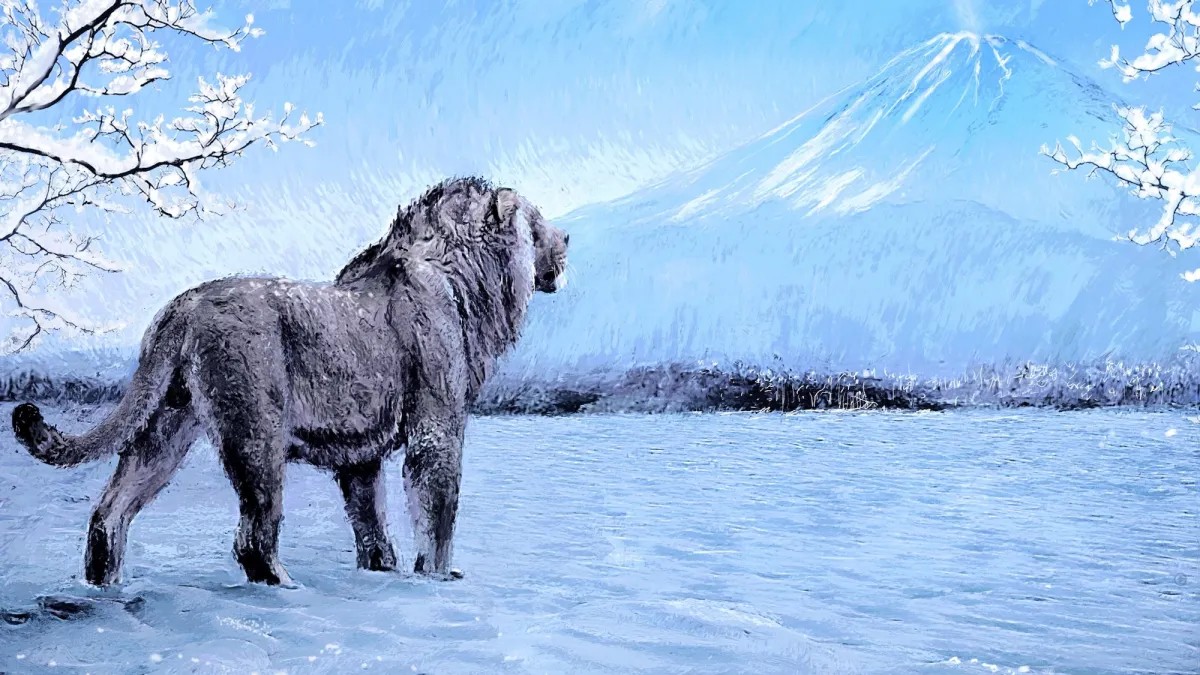
For decades, scientists believed that tigers were the primary big cats to migrate into Japan during the Pleistocene epoch. New genetic evidence now reveals a surprising truth: cave lions, not tigers, were the dominant predators on the Japanese archipelago between 129,000 and 11,700 years ago. This discovery reshapes our understanding of prehistoric Asian fauna and highlights how early migrations shaped regional ecosystems.
The Misidentified Fossils
The error stemmed from relying on skeletal morphology—the shape and structure of bones—to identify species. Early paleobiologists categorized fossils found in Japan as belonging to tigers, assuming that was the most likely candidate given the known migration patterns of big cats from mainland Asia. However, recent advances in DNA sequencing and radiocarbon dating have exposed this misclassification.
Researchers re-examined five fossil specimens previously labeled as tigers. The results? Each sample contained genetic markers aligning with Panthera spelaea, the now-extinct cave lion. Critically, no genetic evidence of tigers was found in the Japanese Late Pleistocene fossil record.
Land Bridges and Prolonged Survival
The presence of cave lions in Japan is linked to temporary land bridges that formed during glacial periods, connecting the Asian mainland to the islands. These bridges allowed for the migration of various species, including both lions and tigers. While tigers did utilize these pathways, the evidence shows that lions were the first and most persistent colonizers of Japan.
What is particularly intriguing is that cave lions thrived in Japan for at least 20,000 years after their extinction on the Eurasian mainland. This prolonged survival suggests that Japan’s unique paleogeography—specifically, its continued connection to the Asian mainland via land bridges—provided a refuge for these lions.
Implications for Understanding Big Cat Distribution
The study’s findings extend the known range of cave lions further east and refine our understanding of the “lion-tiger transition belt,” an area where these two species overlapped in Eurasia. This region shifted southward during glacial periods, influencing the distribution of both species. The new data indicates that the southern reach of this transition belt extended further into East Asia than previously thought.
“This finding extends the known range of cave lions in East Asia and refines our understanding of how far south the lion–tiger transition belt shifted during this period.”
The re-evaluation of these fossils serves as a reminder that scientific understanding is always subject to revision as new technologies and data emerge. In this case, the application of genetic sequencing has fundamentally altered our view of prehistoric Japan’s big cat populations.