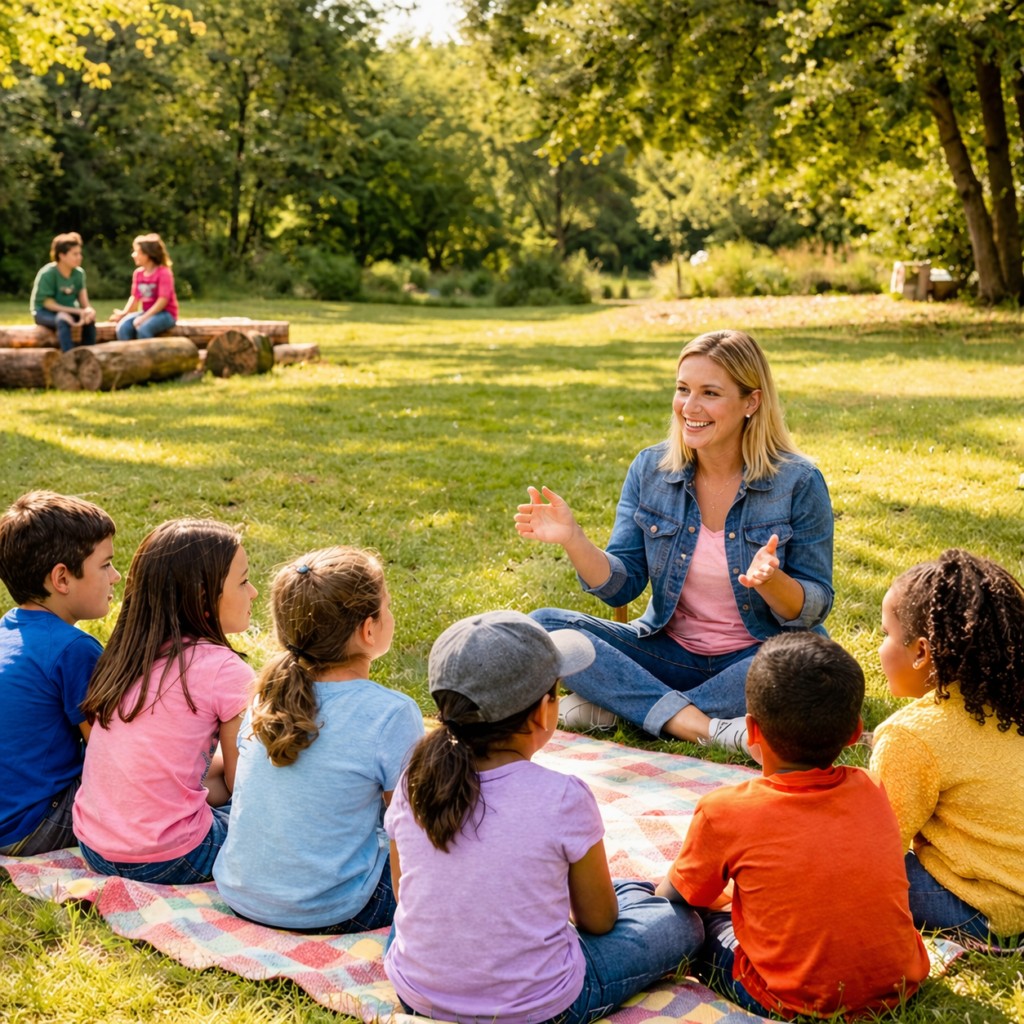
For Kimber Cross, the boundary between a kindergarten classroom and a steep mountain ridge is thinner than one might think. A veteran educator with 20 years of experience and a professional mountaineer, Cross has spent her career discovering that the most vital lessons in life aren’t found in textbooks, but in the grit required to navigate physical and emotional challenges.
The Mountain as a Classroom
The connection between these two worlds became visceral for Cross during a harrowing 2021 rescue on Washington State’s Mount Stuart. After becoming lost in extreme heat, she underwent a grueling 15-hour rescue operation. While the experience was life-threatening, it reinforced a profound realization: the skills required to survive that mountain—teamwork, patience, adaptability, and courage —are the exact same “social-emotional learning” (SEL) skills she strives to teach her five-year-old students.
In modern education, SEL is no longer a peripheral concept. As schools face increasing challenges with student focus and interpersonal conflict, many districts have adopted formal standards to teach emotional intelligence. These competencies include:
– Self-management
– Relationship skills
– Self-awareness
– Responsible decision-making
– Social awareness
Cross argues that while these can be taught in a classroom, they are truly experienced through action. A rope connecting two climbers isn’t just a metaphor for teamwork; it is a high-stakes reality where cooperation is a necessity, not an abstract concept.
The “Can’t. Will. Did.” Framework
As an adaptive athlete born with one hand, Cross has had to navigate her own physical barriers. This journey led her to develop a three-part mental framework that she applies to both climbing and teaching: Can’t. Will. Did.
- Can’t: The initial barrier or the feeling of impossibility.
- Will: The decision to attempt the challenge despite the doubt.
- Did: The successful completion of the goal.
Crucially, Cross notes that this process is rarely a straight line. Often, a person moves from “will” back to “can’t” when faced with setbacks. She believes the true value lies in the “middle ground”—the grit developed during the struggle between the intention and the achievement. In her classroom, this framework helps children find language for perseverance, shifting the focus from the final result to the process of trying.
Addressing the “Whole Child”
The shift toward SEL reflects a broader trend in education: the move toward “whole-child” instruction. Educators are increasingly finding that academic success in math or reading is impossible if a child lacks the foundational ability to regulate emotions, focus, or interact healthily with peers.
This holistic approach is particularly vital for students in urban environments who may lack easy access to nature. Cross emphasizes that “place-based education”—using the natural landscape as a learning tool—offers benefits that digital or indoor learning cannot replicate:
– Sensorimotor engagement: Physical movement activates brain pathways more deeply than reading alone.
– Digital detox: Removing technology allows for mental clarity and presence.
– Equity and representation: Providing diverse children with models of success in the outdoors ensures they feel they belong in nature.
Summit Kids: A New Literary Frontier
After 13 years in the classroom, Cross is transitioning to a new mission: Summit Kids. This upcoming six-book series aims to merge her two worlds by connecting the CASEL social-emotional competencies with outdoor adventures.
The series features an eight-to-ten-year-old protagonist with a limb difference, designed to provide the representation Cross lacked as a child. Each book targets a specific skill through a themed adventure:
* Grit through ice climbing
* Teamwork through glacier walking
* Patience through camping
* Confidence through skiing
* Adaptability through mountaineering
* Courage through rock climbing
“If you don’t quit, you win. Whatever the final outcome is, there’s so much to be had in the middle ground—in the process.”
Conclusion
By blending professional mountaineering with pedagogical expertise, Kimber Cross is creating tools to help the next generation navigate both physical landscapes and internal emotional terrains. Her work suggests that the most enduring lessons are learned when we step outside our comfort zones and engage with the world through action.