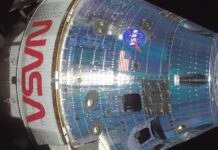
As the Artemis II mission approaches its conclusion, all eyes are on the Orion capsule, Integrity. While the mission’s success will be defined by its lunar transit, its most dangerous moment arrives not in deep space, but during its return to Earth. On Friday at approximately 8:07 P.M. EDT, the capsule is scheduled to splash down in the Pacific Ocean off the coast of San Diego, carrying astronauts Reid Wiseman, Christina Koch, Victor Glover, and Jeremy Hansen home.
However, before that recovery can occur, the crew must survive the violent transition from the vacuum of space to the friction of Earth’s atmosphere.
The Physics of a Fireball
Reentry is a battle against physics. When a spacecraft like Orion hits the atmosphere at hypersonic speeds—projected to be nearly 24,000 miles per hour for this mission—it doesn’t just glide in; it slams into the air. This creates intense atmospheric drag and compresses the air in front of the vehicle, generating a plasma sheath that can reach temperatures of 5,000 degrees Fahrenheit.
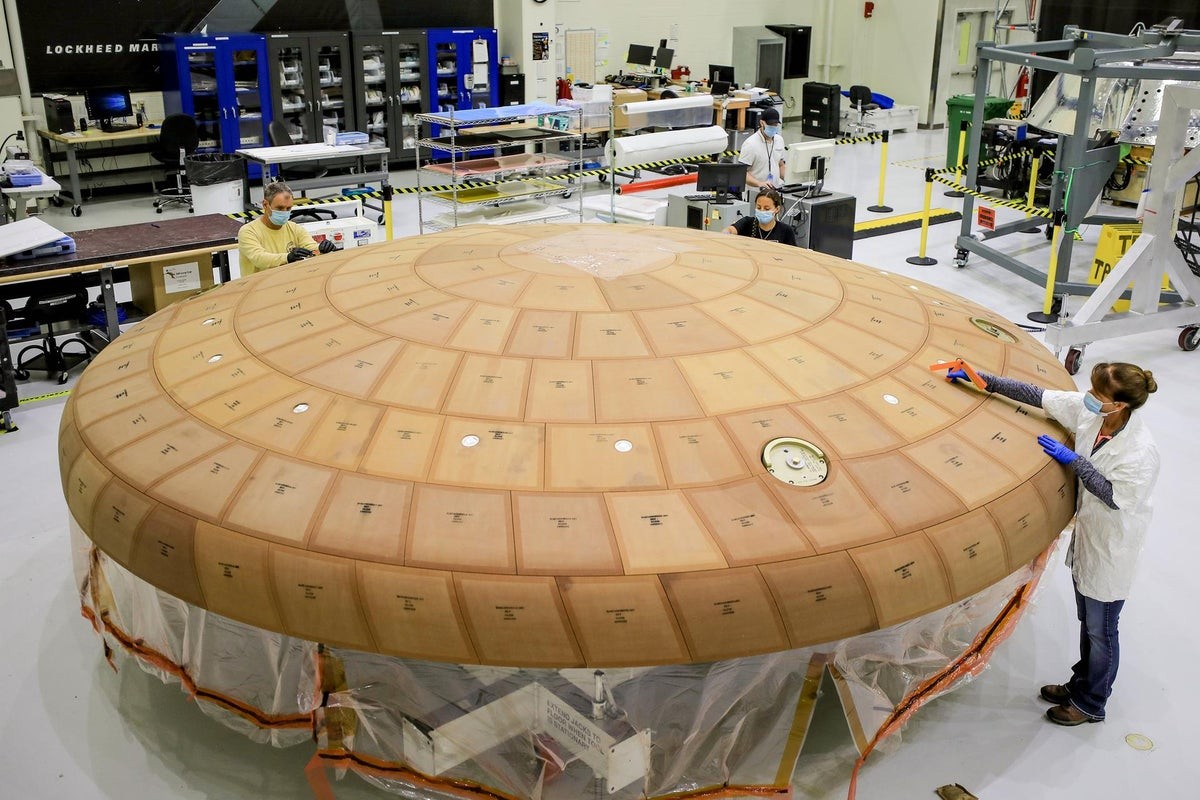
Without a specialized defense system, the heat would instantly incinerate the spacecraft and its crew. To combat this, NASA utilizes an ablative heat shield made of AVCOAT, a specialized mixture of silica, epoxy, and resins. This material is designed to char, melt, and flake away (ablate), physically carrying the destructive heat away from the capsule as it burns off.
Lessons from Artemis I: A Technical Controversy
The reliability of Orion’s heat shield is a subject of intense debate within the aerospace community. During the uncrewed Artemis I mission in 2022, NASA observed an unexpected anomaly: the heat shield cracked and shed more material than predicted by thermal models.
In the wake of this discovery, NASA faced a critical decision. Rather than redesigning the shield—a process that would have been both costly and time-consuming—engineers opted for a trajectory-based solution.
- The Strategy: Mission planners adjusted the reentry path so that the heat shield is exposed to peak temperatures for a shorter duration.
- The Goal: To minimize the thermal stress on the existing material while staying within the safety margins of the current design.
While NASA officials and independent experts like Jud Ready of the Georgia Institute of Technology express confidence in these ground-tested models, the decision has drawn scrutiny. Critics, including heat shield expert Ed Pope, argue that adjusting the flight path treats the symptoms rather than the cause. They point out that NASA is already planning a different heat shield design and formulation for the upcoming Artemis III mission, which suggests an implicit acknowledgment of the current design’s limitations.
The “Blackout” Period
Even if the heat shield holds, the crew faces a period of profound isolation. As the capsule plunges through the upper atmosphere, the plasma surrounding the vehicle will create a communications blackout. For several minutes, mission control will be unable to hear from the astronauts, leaving the crew and the world in a tense silence.
Once the capsule survives the heat and sheds its velocity, the final descent will be managed by thrusters and a series of parachutes, slowing the craft to a much more manageable 17 miles per hour for its Pacific splashdown.
“For me, this will be the most stressful part of the entire mission.” — Jordan Bimm, Space Historian
Conclusion
The reentry of Artemis II represents a high-stakes test of NASA’s ability to manage known technical risks through operational adjustments. The success of this splashdown will determine whether the current Orion architecture is truly ready for the sustained human lunar exploration promised by the Artemis program.