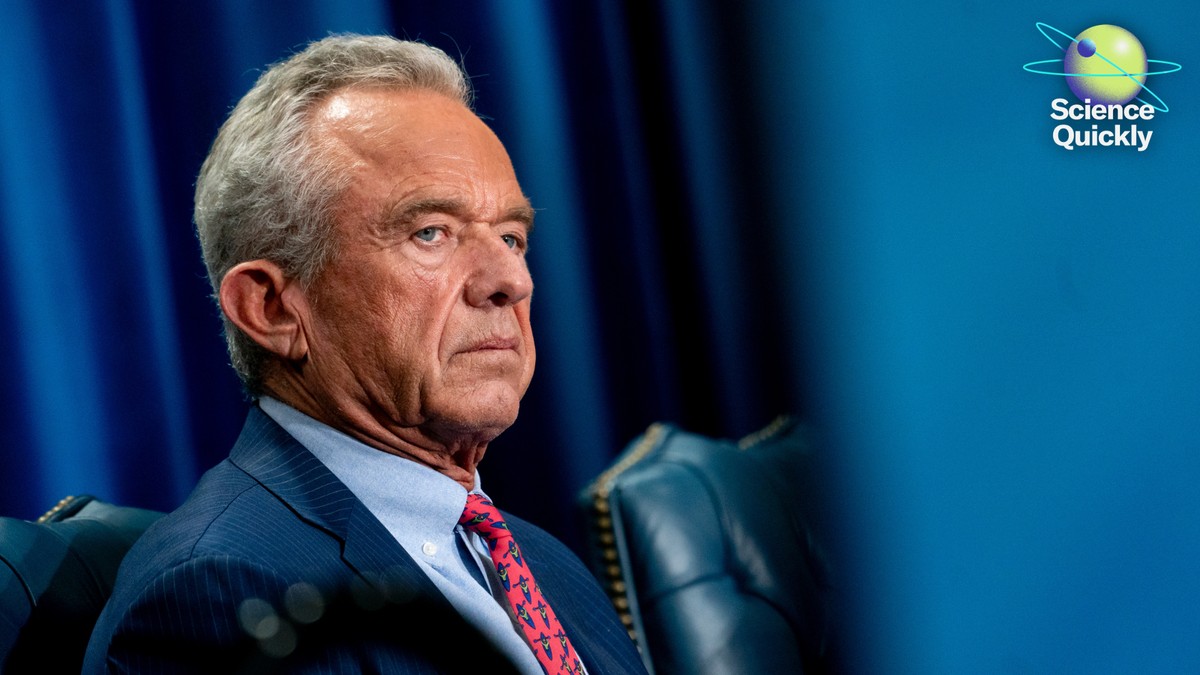
Robert F. Kennedy Jr.’s tenure as U.S. Secretary of Health and Human Services has been marked by actions that contradict established public health practices, raising serious concerns among experts. His decisions, from altering vaccine recommendations to cutting funding for mRNA research, have eroded trust in key institutions like the CDC and FDA.
Contradictory Actions and Policy Shifts
Since assuming office, Kennedy has overseen significant changes that deviate from scientific consensus. The CDC no longer universally recommends the hepatitis B vaccine for newborns, and $22 million in funding was redirected away from mRNA vaccine development. Amid recent measles outbreaks, his administration has muddied messaging on vaccine efficacy while promoting unverified treatments.
Beyond vaccines, Kennedy has championed fringe health theories, such as the claim that seed oils are uniquely detrimental to health, despite scientific evidence to the contrary. He has also repeated conspiracy theories about the U.S. military engineering Lyme disease, further undermining public trust in established institutions.
The Ideology Behind the Policies
Underlying these actions is a belief system that many experts describe as “soft eugenics.” Unlike historical eugenics focused on forced sterilization, this approach involves dismantling lifesaving healthcare systems, like vaccine programs, leaving vulnerable populations exposed to preventable diseases. The goal, critics argue, is to allow “nature to take its course,” resulting in avoidable deaths and a skewed survival rate favoring those deemed “genetically superior.”
When pressed on this characterization, an HHS spokesperson dismissed it as “absurd,” claiming the secretary remains committed to vaccine safety standards. However, evidence suggests otherwise.
Staffing Changes and Institutional Weakening
Kennedy’s administration has systematically weakened key public health agencies through layoffs and strategic appointments. Thousands of experienced personnel have left the FDA, CDC, and NIH, citing disagreements with his policies. Vaccine committees have been reshaped with individuals who oppose vaccination, further eroding public confidence.
The Wellness Industry Influence
Kennedy’s policies reflect the ethos of the wellness industry, which prioritizes “natural” living over established medical interventions. His promotion of outdated dietary advice, such as cooking exclusively in beef tallow and avoiding seed oils, reinforces this approach. This nostalgia for a romanticized past ignores scientific consensus on nutrition.
Political Pragmatism vs. Ideology
Despite his rhetoric, Kennedy has shown a willingness to compromise when political pressure mounts. He endorsed the measles vaccine after outbreaks became a liability, highlighting the opportunistic nature of his leadership. However, the damage to trust in public health institutions remains substantial.
Looking Ahead: A Deteriorating Public Health Landscape
The current trajectory suggests a worsening public health environment. The erosion of trust in proven interventions, combined with political interference, leaves the U.S. vulnerable to future outbreaks. The rejection of germ theory and the embrace of pseudoscientific beliefs undermine decades of progress in infectious disease control.
Kennedy’s leadership underscores a dangerous trend: the politicization of public health. His actions demonstrate that even when forced to acknowledge scientific realities, ideological agendas can still dismantle effective systems and leave communities at risk.