


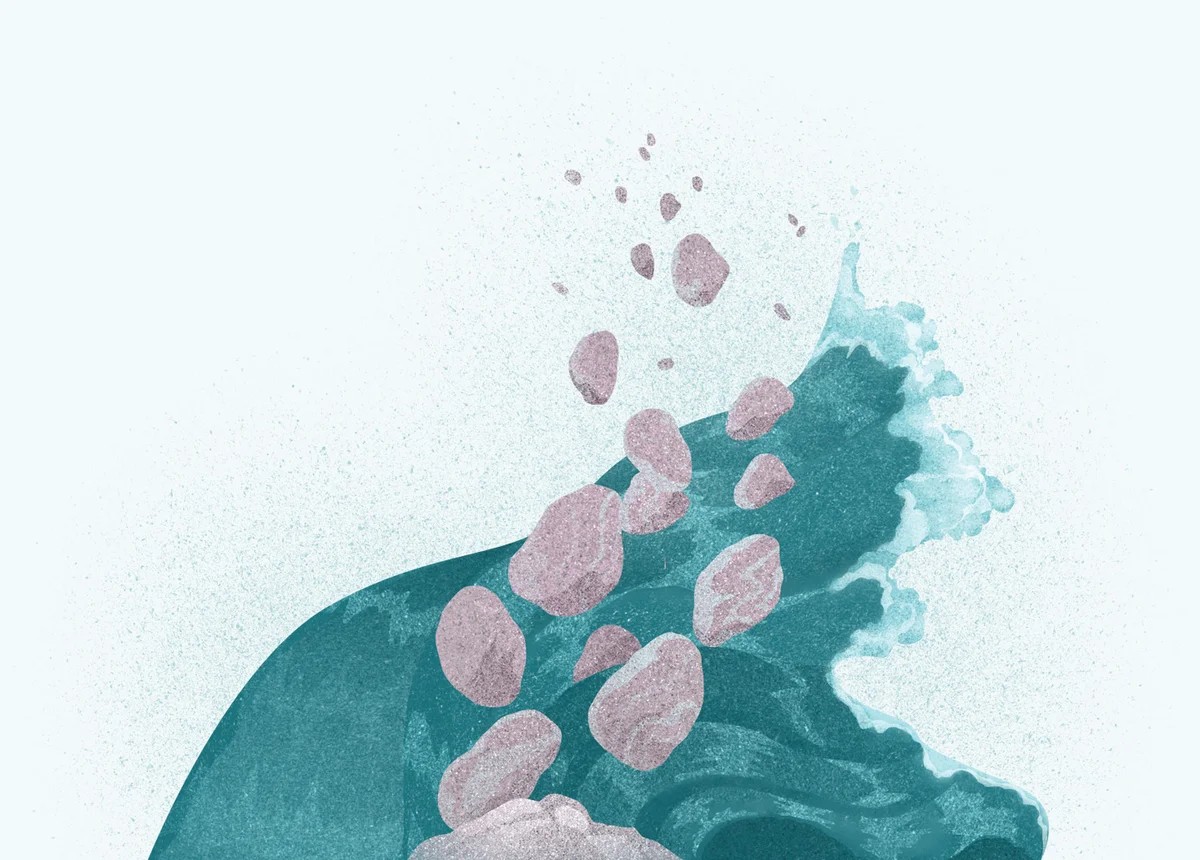
The massive boulders scattered across Hickory Run State Park in Pennsylvania tell a story of geological forces far more complex than simple glacial erosion. For years, the prevailing explanation held that these formations were the result of ice sheets, remnants of ancient glaciers that once reshaped the landscape. However, recent research suggests a more insidious process at work: freeze-thaw weathering, a slow but relentless internal fracturing of the bedrock itself.
The Myth of Glacial Hammering
The initial narrative, often presented to visitors, depicted ice sheets as titanic forces crushing mountains into rubble. This view aligns with a broader understanding of glacial activity across North America, where entire valleys were carved and reshaped by moving ice. Yet, the boulders at Hickory Run don’t fit this model neatly. Their distribution and formation suggest an origin rooted in the very material they’re made of.
Water’s Role: Rot From Within
The more accurate explanation involves water seeping into microscopic cracks within the granite bedrock. As temperatures fluctuate, the water freezes and expands, exerting immense pressure that gradually splits the rock apart. This isn’t a dramatic, external impact like a glacier; it’s a slow, internal decay – a kind of geological rot. This process is often overlooked because it’s less visually striking than the obvious force of moving ice.
Why It Matters: A Lesson in Geological Nuance
The correction to the original narrative isn’t merely an academic detail. It highlights how easily simplified explanations can overshadow more complex truths. In this case, the tendency to attribute large-scale geological features to obvious forces (like glaciers) can obscure subtler but equally powerful processes. The fact that even the scientists presenting this information debated how the children would interpret it shows how hard it is to let go of old narratives.
The persistence of the glacier theory underscores a broader trend: humans often favor dramatic explanations over gradual, internal changes. This bias extends beyond geology, influencing how we perceive everything from climate change to economic shifts.
In conclusion, the boulders at Hickory Run serve as a reminder that nature’s most profound impacts aren’t always the loudest. The slow, internal fracturing of rock by water is a powerful force, even if it doesn’t arrive with the visual spectacle of a moving glacier.


