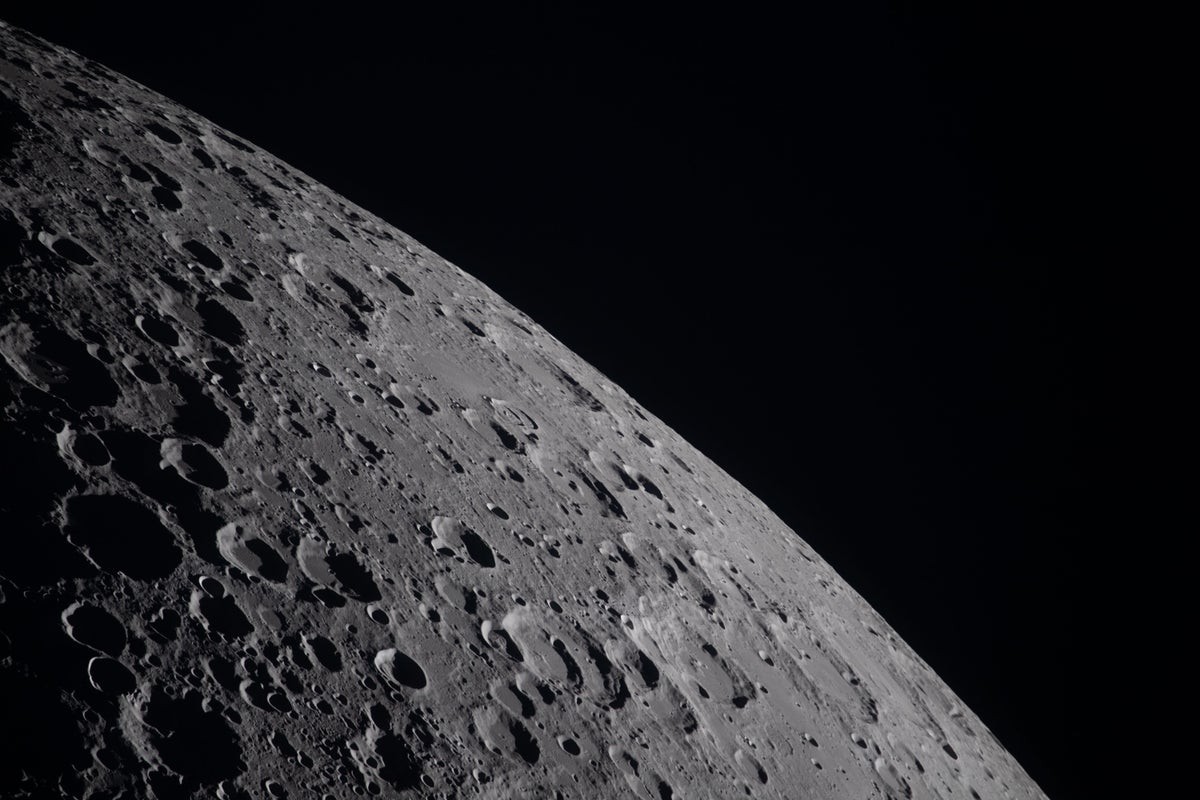
The Artemis II mission, widely regarded as a pivotal “work trip” for humanity’s return to the lunar vicinity, has officially delivered its visual payload. NASA has published more than 12,000 photographs taken by the four-person crew during their ten-day journey, offering the public an unprecedented look at the mission that launched on April 1 and concluded with a safe return to Earth on April 10.
While the mission itself was a success—marking the first time humans traveled beyond low-Earth orbit since the Apollo era—the immediate public view was limited. During the voyage, NASA prioritized critical mission communications over data transmission, meaning only occasional snapshots were shared in real-time. Now that the astronauts have landed and their memory cards are secured, the agency is undertaking a massive effort to process and release the full archive.
The Scale of the Data Deluge
The sheer volume of imagery captured by astronauts Reid Wiseman, Victor Glover, Christina Koch, and Canadian Space Agency astronaut Jeremy Hansen has created a logistical challenge at NASA’s Johnson Space Center.
“There’s a Herculean effort that goes on… with the teams that actually have to take all these data and get them into the mission data infrastructure,” explained Kelsey Young, a planetary scientist at NASA’s Goddard Space Flight Center and lunar science lead for Artemis II. “The amount of data that they are now wrangling to try to get into the system is huge.”
As of now, 12,217 photographs are available on NASA’s Gateway to Astronaut Photography of Earth website. However, this is likely just the beginning. Image codes currently range from ART002-E-168 to ART002-E-30001, suggesting that approximately 18,000 additional images may still be in the pipeline.
How to Access the Photos:
* Visit the NASA Gateway to Astronaut Photography of Earth.
* Navigate to Search Using Other Methods and enter the specific mission codes.
* Note that the site’s primary search tools have not yet been fully updated for Artemis II, so loading times may vary.
From Raw Data to Scientific Insight
The release of these images is not merely for public enjoyment; it is a critical step in scientific analysis. The Artemis II lunar science team, comprising about 60 researchers, is currently sifting through the footage to distinguish between high-quality scientific data and the inevitable blurry shots or misfires common in any photography endeavor.
The team faces a six-month deadline, extending until October, to publish preliminary reports on science and operations. Their workflow involves several key stages:
1. Verification: Determining which images are usable and which are errors.
2. Orientation: Mapping each image to specific lunar features to understand context.
3. Analysis: Filtering the visual data through the mission’s top ten scientific priorities.
Why These Images Matter
These photographs serve as vital tools for future exploration. The science objectives driving this analysis include:
* Geological History: Studying color and brightness variations to understand the Moon’s formation.
* Impact Monitoring: Observing flashes caused by meteoroid strikes on the lunar surface.
* Site Selection: Identifying and evaluating potential landing sites for upcoming Artemis missions.
* Atmospheric Analysis: Investigating the Moon’s wispy exosphere and any suspended lunar dust.
The Final Archive
Once processed, the images will find their permanent home in NASA’s Planetary Data System, the central repository for data from all NASA missions relevant to planetary science. This archive will also include voice recordings made by the astronauts during their lunar flyby, accompanied by a user’s guide designed to help researchers maximize the utility of the information.
While scientists work to extract hard data, the public can still appreciate the aesthetic wonder of the mission. As Kelsey Young noted, “It’s hard not to just absolutely melt into a puddle of awe and amazement at some of the really spectacular ones.”
Conclusion: The release of these 12,000+ images marks the transition of Artemis II from an active mission to a lasting scientific resource, providing both immediate visual wonder and long-term data for humanity’s next steps on the Moon.