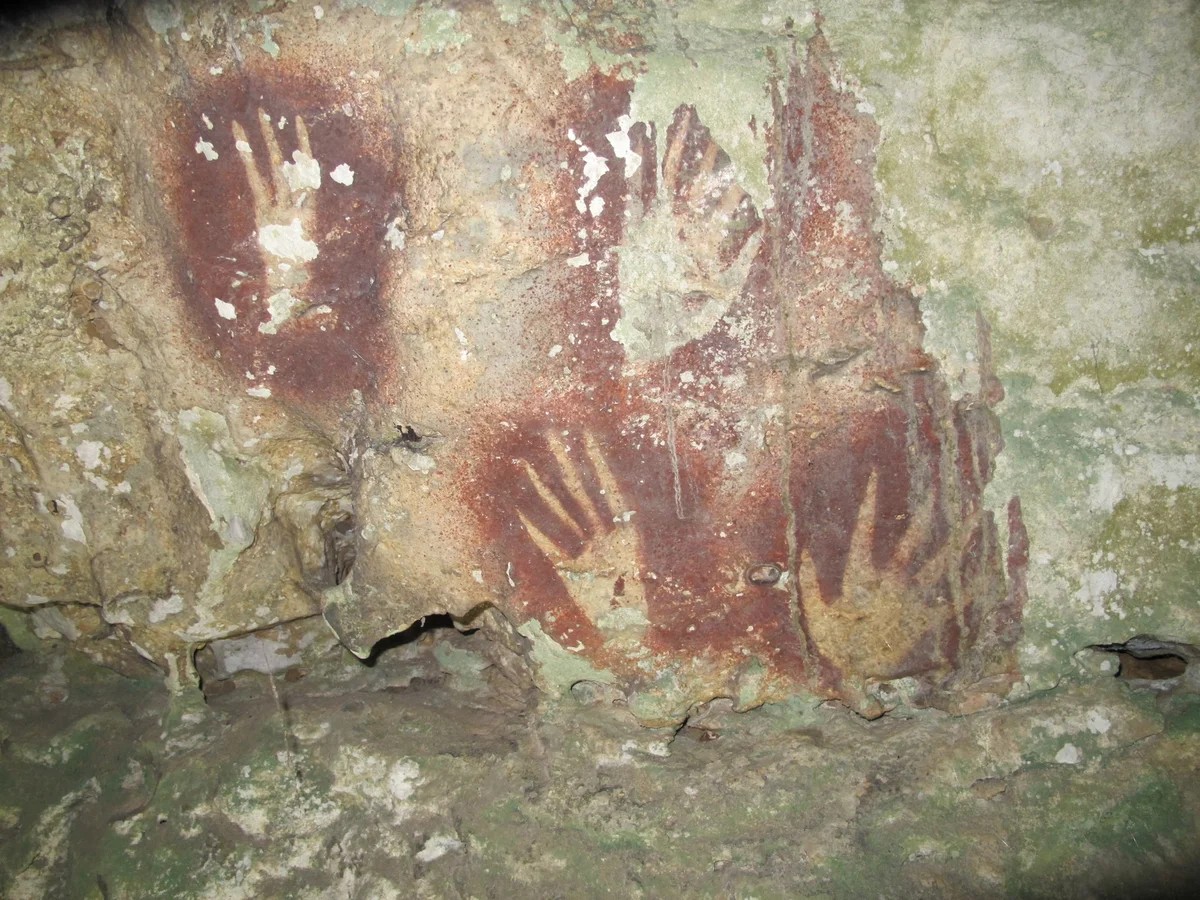
A newly analyzed hand stencil discovered in a Sulawesi cave system pushes back the timeline of human artistic expression by at least 15,000 years. The artwork, dated to a minimum of 67,800 years old, marks the oldest confirmed cave painting ever found, significantly predating previous discoveries on the same island and elsewhere. This finding doesn’t just add another entry to the record books; it reshapes our understanding of early human cognitive abilities and migration patterns.
Discovery and Dating Methods
The ancient art was found in a cave already known for prehistoric paintings, but overlooked until recently. Researchers used a non-destructive laser dating method—avoiding traditional drilling—to accurately analyze the pigment composition and determine its age. This technique allowed for more comprehensive testing, yielding a more precise timeframe than previous methods would have allowed. The nearby stencil was dated to 60,900 years ago.
Implications for Human Evolution
The discovery challenges the notion that advanced cognitive skills, such as symbolic thought and creative expression, developed later in human history. The existence of sophisticated art nearly 70,000 years ago suggests that early Homo sapiens possessed a capacity for abstract thinking far earlier than previously assumed.
“They confirm what is known today: that art is positively correlated to critical thinking and creative problem-solving skills,” says Franco Viviani, a physical anthropologist.
This also connects to the broader understanding of human development alongside other discoveries such as shell jewelry dating back over 70,000 years, and engraved bones attributed to Neanderthals from 57,000 years ago.
Cultural Insights and Migration to Australia
The artwork itself provides clues about the culture of its creators. The hand stencil features distinctive, clawlike fingers—a style unique to Sulawesi cave art. Researchers theorize this design may symbolize a deep connection between humans and animals, reflecting early beliefs or worldview.
The presence of such old art in Indonesia also has implications for the timeline of human migration to Australia. Archeologists have long debated when the first humans arrived on the continent, with estimates ranging from 65,000 to 50,000 years ago. This discovery suggests that humans may have reached Australia even earlier, potentially undertaking the first intentional long-distance sea crossing.
This new evidence underscores the complexity of early human history, prompting a reassessment of migration routes and the development of artistic expression in our species. The ability to create art this long ago proves that symbolic thought and cognitive sophistication were present far earlier than previously believed, raising questions about how and why humans developed these abilities.