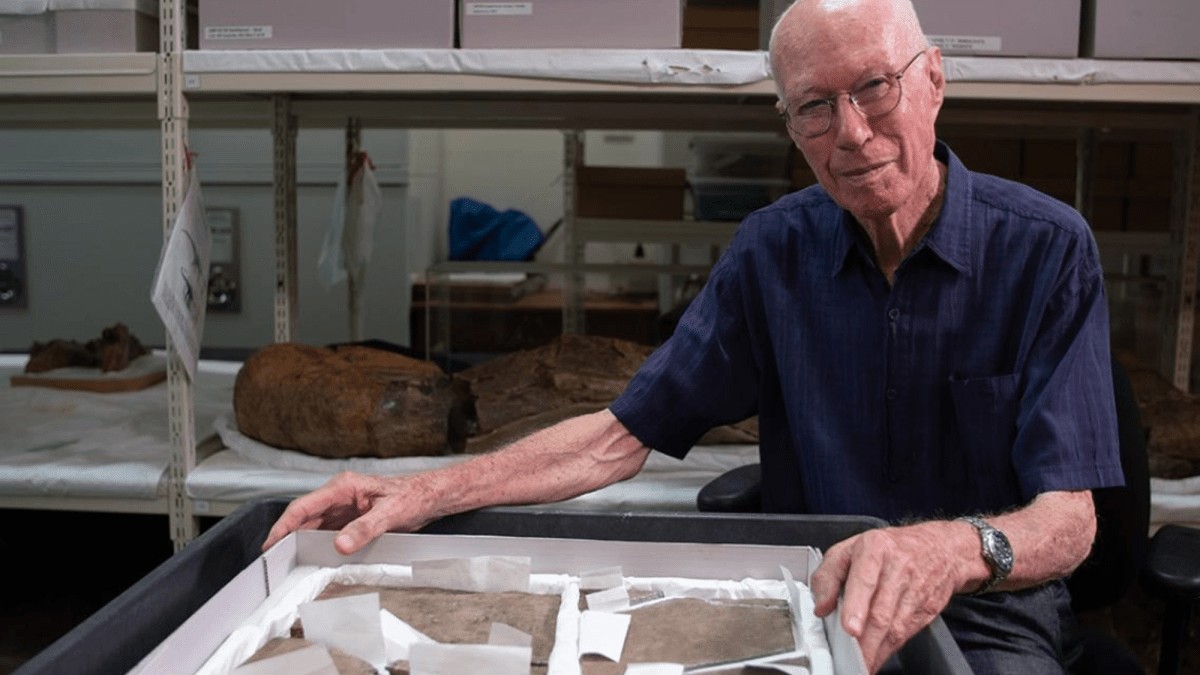
A remarkably old dinosaur footprint, discovered in Brisbane, Australia, almost 70 years ago, has finally been formally documented as the nation’s oldest dinosaur fossil. The print, unearthed in 1958 by then-teenager Bruce Runnegar, reveals that dinosaurs roamed Australia far earlier than previously known — around 230 million years ago, during the Late Triassic period.
A Long-Hidden Discovery
Runnegar, who later became a paleontologist himself, held onto the fossil for decades, sharing it with students during his time teaching at universities in Australia and the United States. The 7-inch print depicts a small, two-legged dinosaur likely belonging to the early sauropodomorph group — primitive relatives of the long-necked dinosaurs that would dominate the Mesozoic Era.
The significance of this find isn’t just its age; it’s the context. Australia during the Late Triassic was part of Gondwana, the ancient supercontinent linking Africa, South America, and Antarctica. This footprint confirms that dinosaurs were already established in the region before continental drift fully separated these landmasses.
Brisbane’s Unexpected Paleontological Treasure
The footprint was preserved in sandstone for millions of years before being extracted during quarrying operations. Ironically, the original site is now inaccessible due to urban development, making this single fossil the only surviving evidence of dinosaurs from that specific area.
“This is the only dinosaur fossil to be found in an Australia capital city and shows how globally significant discoveries can remain hidden in plain sight,” explains Dr. Anthony Romilio, a paleontologist involved in the study. The team’s analysis, published in the journal Alcheringa, details the footprint’s morphology, estimating that the dinosaur stood around 2.4 to 2.6 feet tall at the hip and weighed approximately 300 pounds.
A Reminder of Lost History
The story of this fossil is a reminder that important scientific discoveries can lie dormant for decades, awaiting the right expertise to unlock their value. Had Runnegar not preserved the print, Brisbane’s dinosaur history might have remained lost forever.
The fossil now resides at the Queensland Museum, where it will continue to inform research and offer a tangible link to Australia’s ancient past. This discovery not only rewrites the timeline of dinosaur presence in the region but also highlights the importance of preserving geological materials, even in urban environments.