Educational testing is undergoing a fundamental shift. For the first time, artificial intelligence offers the potential to move beyond standardized, one-size-fits-all assessments toward dynamic, personalized evaluations. However, simply applying AI to existing flawed systems risks amplifying biases and perpetuating inequalities—essentially “paving over old cow paths” with new technology.
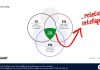
To create a truly effective and equitable future for assessment, two core frameworks must be integrated: Evidence-Centered Design (ECD) and Universal Design for Learning (UDL). This means prioritizing accessibility not as an afterthought, but as a foundational principle.
The Logic of Assessment: Evidence and Validity
At its heart, testing is about gathering evidence. ECD treats assessment like a legal argument, requiring a clear claim (e.g., “This student understands algebra”), supporting data (test results), and a valid warrant (the reasoning connecting the data to the claim).
The critical flaw in many current systems lies in construct-irrelevant barriers —obstacles that prevent students from demonstrating their true understanding. A student who struggles with font size or processing speed isn’t failing the test; they’re failing the test design. Ignoring these barriers yields meaningless results, as performance becomes a measure of compliance rather than competence.
Conditional Inference: Fairness Beyond Standardization
The traditional testing model relies on the false assumption that equal conditions guarantee fairness. True fairness demands conditional inference : standardizing the validity of the assessment while actively varying the delivery to meet individual needs.
Imagine an unadjustable microscope: a blurry image isn’t the subject’s fault, but the instrument’s. Similarly, forcing all students to meet the same rigid criteria ignores the diverse ways they learn and process information.
Designing for the Edges: Benefits for All
Investing in technologies tailored for students with disabilities is not merely an act of inclusion; it’s a catalyst for improving assessment for all learners. By addressing barriers for those on the margins, we create systems that are more accurate, reliable, and equitable across the board.
Several companies, backed by initiatives like the US Department of Education’s SBIR program, are already proving this concept:
- Alchemie (Kasi) : Uses computer vision and tactile tools to make chemistry accessible to visually impaired students.
- IDRT : Provides assessments in American Sign Language for Deaf students, eliminating reliance on written English.
- Nimble Tools : Integrates adaptive overlays, text-to-speech, and magnification to personalize testing experiences.
- IQ Sonics : Leverages music to assess expressive language skills in children with speech delays.
Systemic Barriers and AI-Driven Solutions
The challenge extends beyond individual accommodations. To ensure equitable access, systemic infrastructure is needed:
- Presence : Facilitates secure remote access to therapy services.
- Education Modified : Translates IEPs into actionable classroom workflows.
Multimodal AI has the potential to dynamically adjust assessment features in real time, but this requires careful implementation. Like closed captioning—once an add-on, now standard—accessibility must be baked into the design process from the start.
Conclusion
AI doesn’t change the fundamental principles of valid assessment; it amplifies our ability to achieve them. By anchoring investments in ECD and UDL, we can ensure that every student has a clear path to demonstrate their capabilities, unlocking a future where testing truly measures knowledge, not barriers.