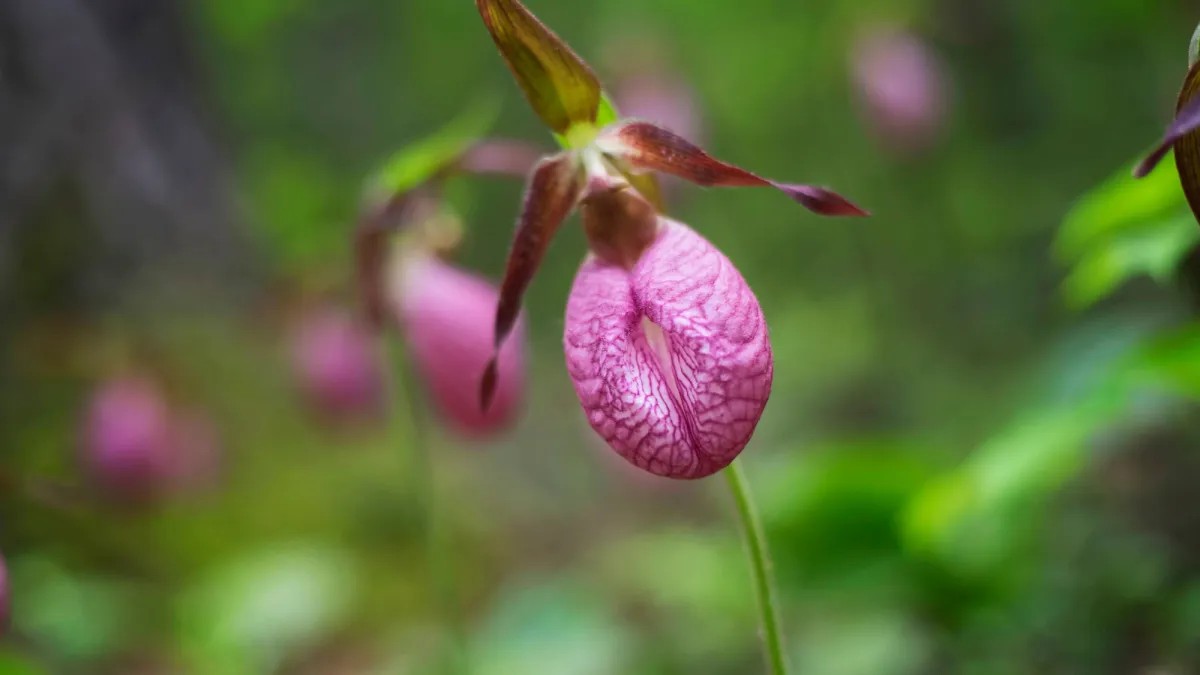
While many wildflowers offer nectar as a reward for visiting insects, the Pink Lady’s Slipper (Cypripedium acaule ) has mastered a much more cunning strategy. Rather than providing a meal, this orchid uses a sophisticated biological “trap” to ensure its own reproduction, effectively turning visiting bees into unwitting couriers for its pollen.
A Sophisticated Pollination Scam
The Pink Lady’s Slipper is a prominent member of the orchid family, characterized by its large, bulbous, pink-colored pouch. Found widely across the eastern United States and blooming typically between May and July, the flower uses its vibrant color and enticing fragrance to lure pollinators toward it.
However, once a bee enters the slipper-shaped pouch, the deception begins:
- The Bait: The bee enters the flower, driven by the expectation of finding a nectar reward.
- The Trap: Upon entering, the bee finds that no nectar exists. The entrance effectively closes behind the insect, leaving it inside a “floral escape room.”
- The Forced Exit: There is only one way out—a narrow, restrictive opening located near the top of the flower.
- The Result: As the bee struggles to squeeze through this tight exit, its body brushes against the flower’s reproductive organs, coating it in pollen.
Once the bee escapes, it often flies to the next orchid, repeating the cycle and successfully transferring the pollen to the next generation of flowers.
Why This Strategy Matters
This method of pollination is known as deceptive pollination. Unlike many plants that engage in a mutualistic relationship—where both the plant and the insect benefit—the Pink Lady’s Slipper operates on a one-sided benefit. The orchid achieves reproduction without the metabolic cost of producing nectar, while the bee loses time and energy.
This evolutionary tactic raises interesting questions about the efficiency of nature. While it may seem “unfair” to the bees, this specialized mechanism ensures that the orchid’s pollen is moved precisely and effectively, reducing the chance of wasted resources.
A Diverse Family of “Slippers”
The Pink Lady’s Slipper is not alone in its genus. The Cypripedium family includes several other specialized species, each with its own distinct appearance:
- White Lady’s Slipper (Cypripedium candidum )
- Yellow Lady’s Slipper (Cypripedium parviflorum )
- Spotted Lady’s Slipper (Cypripedium guttatum )
- Ram’s-head Lady’s Slipper (Cypripedium arietinum )
While these flowers may vary in color and pattern, they all share the remarkable ability to manipulate the behavior of insects to ensure their survival.
Nature is not always a cooperative partnership; sometimes, it is a masterclass in strategic deception.
Conclusion
The Pink Lady’s Slipper utilizes a clever evolutionary trick, using deceptive scents and structural traps to force pollinators to carry its pollen. This ensures the orchid’s survival through a highly efficient, albeit one-sided, biological scam.