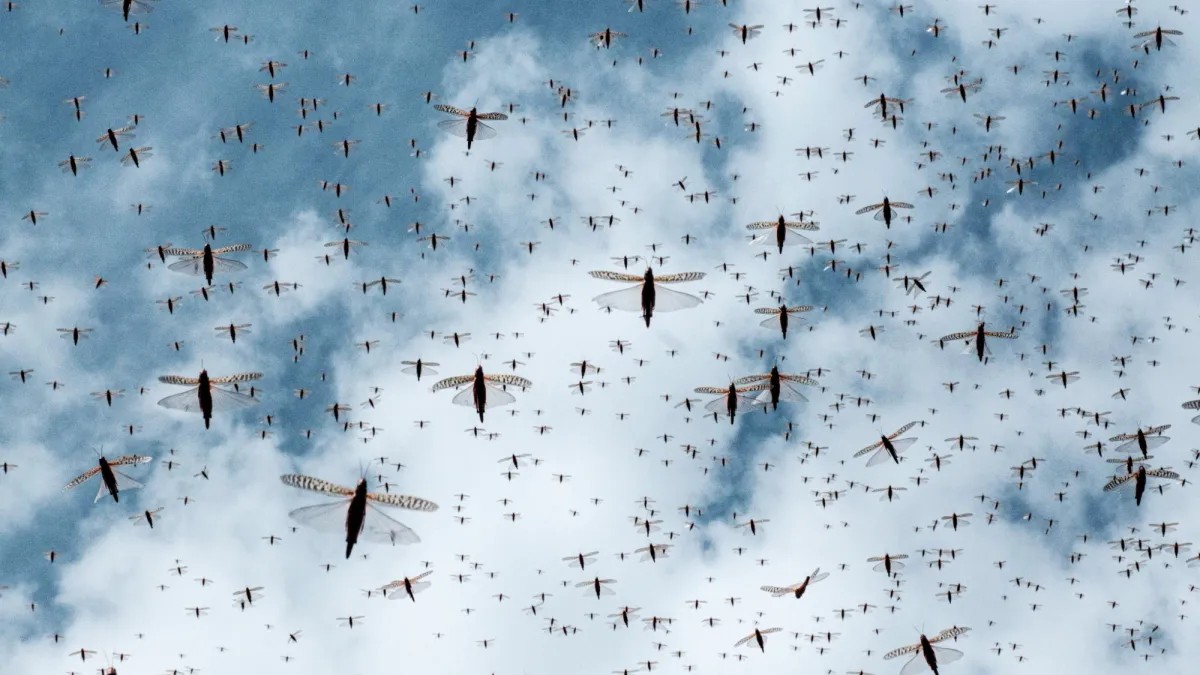
Locust swarms pose a significant threat to global agriculture, causing billions of dollars in annual damage. While traditional control methods rely on chemical insecticides and biopesticides, a recent study reveals a surprisingly simple solution: enriching soil with nitrogen to make crops less palatable to locusts. This approach could offer a sustainable alternative to current pest management practices, particularly as climate change exacerbates locust outbreaks.
The Locust Problem: A Growing Threat
Locust infestations are a recurring crisis in agricultural communities worldwide. Dense swarms can devastate vegetation across vast areas. In the western U.S., livestock rangelands alone suffer an estimated $1.2 billion in losses each year. Outbreaks in the Horn of Africa, the Arabian Peninsula, and southwest Asia have cost over $300 million to control in recent years. The problem is escalating as climate change creates warmer, wetter conditions that expand suitable breeding grounds for locusts.
The core issue is simple: locusts need protein to fuel their swarming behavior, but prefer high-carb diets to build fat reserves for migration. This creates a dietary weakness that scientists are now exploiting.
Nitrogen Enrichment: A Diet Hack for Pest Control
Researchers at Gaston Berger University in Senegal, working with Arizona State University (ASU) and local farmers, discovered that nitrogen-based fertilizers alter crop composition. Treated plots yielded high-protein, low-carb crops, which locusts find less appealing.
In field tests across central Senegal, farmers grew millet in both treated and untreated plots. Results showed a significant reduction in pest abundance and crop damage in the nitrogen-enriched fields, alongside increased millet yields. This approach demonstrates a viable outbreak management strategy for the Senegalese grasshopper, a species prone to swarming.
Why This Matters: Climate Change and Food Security
The effectiveness of this nitrogen-based approach is particularly relevant in the context of climate change. Rising temperatures, increased rainfall, and more frequent cyclonic activity create ideal breeding conditions for locusts.
As climate scientist Daniel Gebregiorgis explains, “Global warming is driving an uptick in locust outbreaks.” The changing climate is not just a factor; it is now “the most important trigger” for swarming.
Human factors such as overgrazing and intensive farming exacerbate the issue by creating nitrogen-poor soils that favor carb-heavy plant growth, sustaining locust swarms.
Scalability and Sustainability: Future Steps
While promising, scaling this solution faces challenges. Outbreaks often occur in remote areas with limited access to resources. Researchers are now exploring the use of compost fertilizer as a more accessible and sustainable alternative to costly commercial fertilizers.
This research also challenges long-held perceptions of locust swarms as random or even divine punishment. Arianne Cease, director of ASU’s Global Locust Initiative, emphasizes that locust behavior is driven by environmental conditions and human land management practices. Locusts aren’t a plague, they are “just insects doing their thing.”
The key takeaway is that sustainable locust management requires understanding the interplay between climate, land use, and insect biology. By altering crop composition through nitrogen enrichment, farmers can disrupt the locust diet and mitigate the devastating impact of swarms on food security.