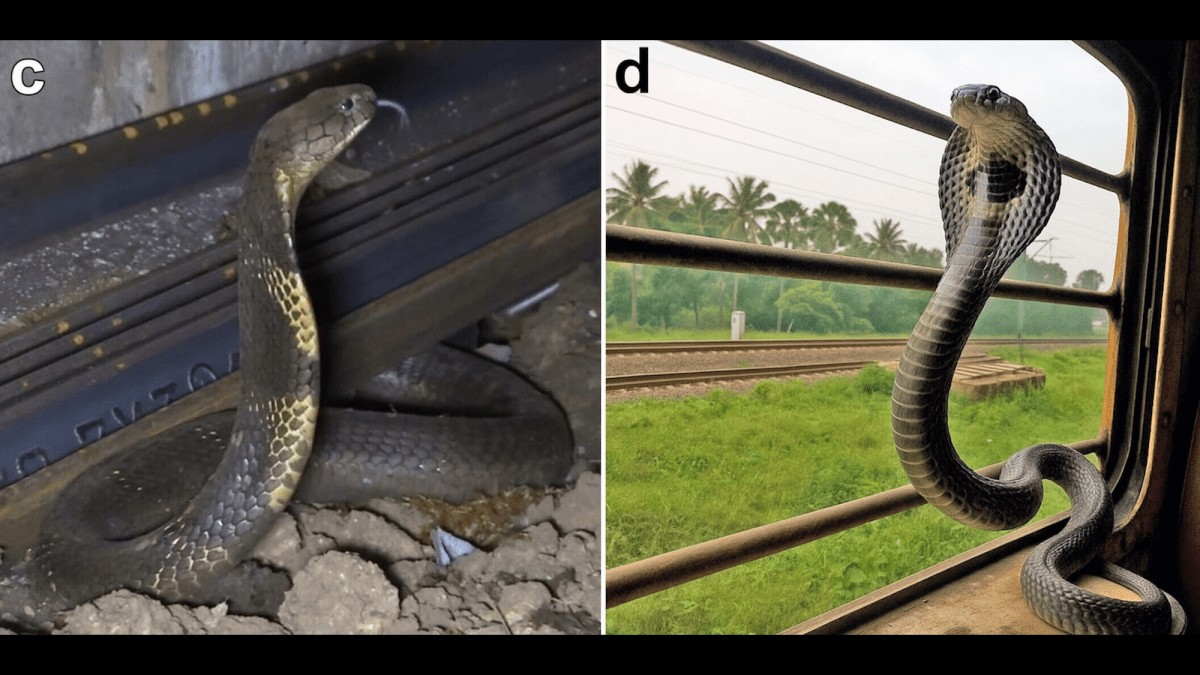
The world’s largest venomous snake is unintentionally expanding its range thanks to India’s railway system. A recent study reveals that Western Ghats king cobras (Ophiophagus kaalinga ) are being transported to non-native areas via trains, creating survival challenges for the species and raising new questions about how wildlife adapts to modern infrastructure.
Unexpected Passengers
Researchers analyzed two decades of verified reports (2002-2024) in Goa, southwestern India, documenting 47 cobra encounters. This is notable because the Western Ghats king cobra is not native to Goa, meaning these snakes are arriving in the region through unusual means. The rise in reported incidents correlates with increased smartphone use and social media documentation, suggesting a previously underreported phenomenon.
How Snakes Are Using Railways
The team theorizes that cobras are drawn to trains for several reasons: trains provide shelter, access to prey (like rodents), and a warm, secure environment. Once aboard, they can travel long distances rapidly, effectively turning railways into “high-speed conduits” for dispersal. This contrasts sharply with roads, which often act as barriers or sources of mortality for snakes.
The Problem with New Habitats
While the snakes may thrive in Goa’s forested interiors, the majority of reported sightings occur near railway stations, where conditions are drier, prey is scarce, and survival rates are lower. This suggests the snakes aren’t actively choosing these locations but are being deposited there passively by the rail system. The study indicates that railways may be an underappreciated method of wildlife migration, potentially impacting other vulnerable species as well.
“This isn’t about snakes actively seeking trains; it’s about railways inadvertently facilitating their movement,” explains herpetologist Dikansh Parmar, who has personally rescued cobras from train cars.
Why This Matters
This discovery highlights how human infrastructure can reshape animal distribution patterns. Understanding these mechanisms is crucial for conservation efforts, as it allows researchers to anticipate and mitigate the risks associated with unintended wildlife transport. The study underscores the need for further investigation into how other species might be using railways and other transportation networks to colonize new habitats.
The phenomenon demonstrates that modern infrastructure isn’t just a human construct; it’s a powerful ecological force that can dramatically alter species ranges and survival rates.