





























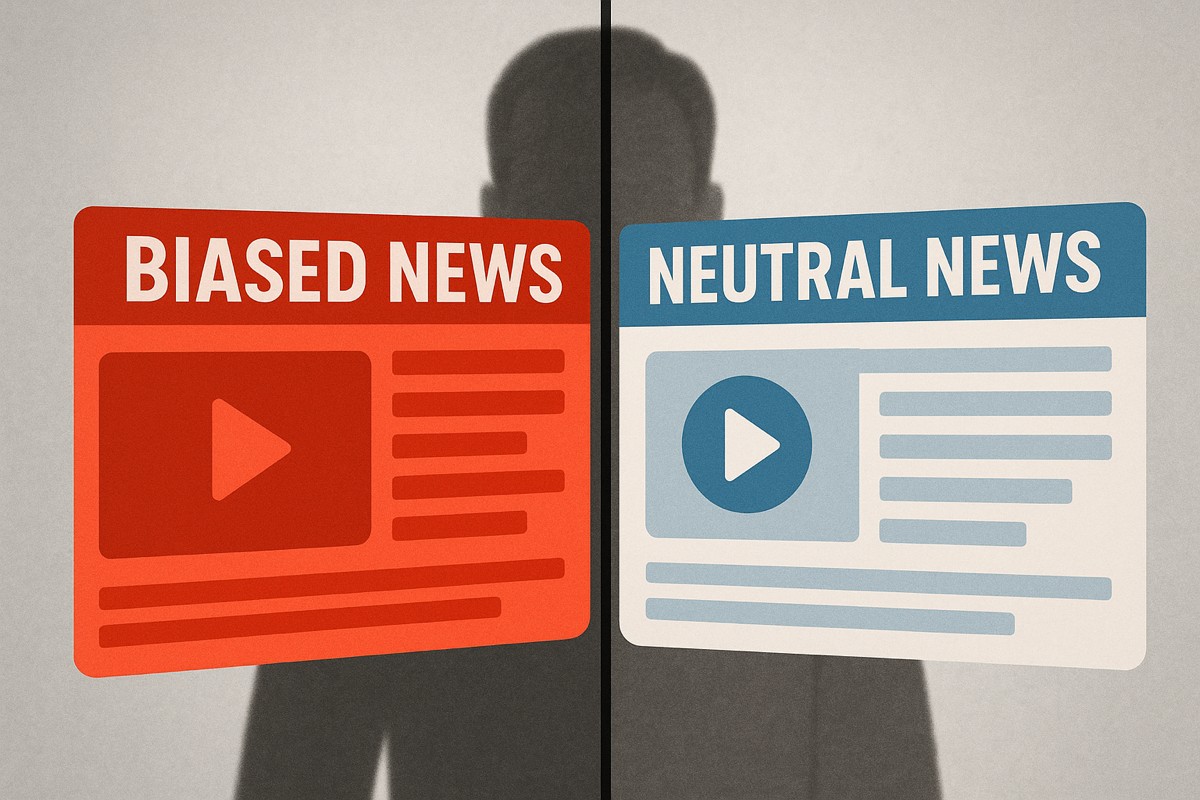
Students are increasingly vulnerable to intellectual traps in the age of algorithmic feeds and instant information. One of the most insidious is confirmation bias : the tendency to seek out and favor information that confirms existing beliefs, while ignoring or downplaying evidence to the contrary. This isn’t just a matter of stubbornness; it’s a deeply ingrained cognitive shortcut that social media platforms exploit for engagement.
The problem is not merely theoretical. The way content is curated on platforms like TikTok reinforces existing viewpoints, creating echo chambers where students rarely encounter challenging perspectives. This has significant implications for their ability to think critically, evaluate information objectively, and form well-rounded understandings of complex issues.
Why This Matters
Confirmation bias isn’t just an academic curiosity; it’s a systemic distortion of thinking. Algorithms are designed to maximize user engagement, and one of the most effective ways to do this is by feeding people what they already agree with. The result is a generation of learners who may be increasingly resistant to new ideas, alternative viewpoints, or uncomfortable truths.
The stakes are high. In a world awash in misinformation, the ability to identify and counter bias is no longer optional—it’s essential for responsible citizenship and intellectual growth.
Understanding the Mechanism
Confirmation bias is a well-documented cognitive phenomenon first explored in depth by behavioral economists like Richard Thaler, Steven Levitt, and Daniel Kahneman. Their research reveals that humans consistently prioritize information that aligns with their pre-existing beliefs, even when presented with contradictory evidence. Social media algorithms amplify this tendency by tailoring feeds to reinforce user preferences, turning intellectual curiosity into a self-fulfilling cycle of agreement.
Practical Strategies for Educators
The good news is that confirmation bias isn’t insurmountable. Educators can equip students with the tools to identify and mitigate this cognitive trap. Here are ten strategies, aligned with Bloom’s Taxonomy, to integrate into the curriculum:
- Seek Disconfirming Evidence: Encourage students to actively search for information that contradicts their assumptions (Analyzing/Evaluating).
- Play Devil’s Advocate: Have students argue from opposing viewpoints to challenge their own reasoning (Understanding/Analyzing).
- Diversify Social Feeds: Intentionally follow diverse sources to broaden exposure to different perspectives (Applying).
- Fact-Check the Source: Emphasize scrutinizing the credibility of information sources, not just the claims themselves (Evaluating).
- Monitor Emotional Responses: Teach students to recognize when strong emotions cloud judgment (Understanding/Analyzing).
- Employ the Three-Source Rule: Verify major claims with at least three independent, credible sources (Evaluating).
- Question Search Engine Bias: Encourage students to use incognito mode or alternative search engines to avoid personalized results (Analyzing).
- Deconstruct Underlying Beliefs: Prompt self-reflection on the motivations behind strongly held convictions (Analyzing).
- Focus on Data Over Conclusions: Teach students to prioritize evidence and methodology over pre-packaged narratives (Analyzing/Evaluating).
- Engage in Constructive Dialogue: Facilitate respectful debates where students learn from opposing viewpoints (Creating/Evaluating).
Integrating Critical Thinking Across Disciplines
The most effective approach isn’t to isolate critical thinking as a separate subject. Instead, educators should embed these strategies into existing curricula:
- Science: Design experiments that require students to look for results against their initial hypothesis.
- Math: Encourage the use of inverse operations or contextual checks to identify potential errors.
- Social Studies: Assign research projects that demand students explore multiple perspectives on historical events.
- English/Language Arts: Challenge students to identify weaknesses in persuasive arguments or advertisements.
The goal isn’t just to teach critical thinking; it’s to teach students how they think, exposing the biases that shape their perceptions.
Conclusion
In an era of algorithmic manipulation, confirmation bias is a clear and present danger to intellectual development. By proactively equipping students with the tools to recognize and counter this cognitive trap, educators can foster a generation of agile, adaptable thinkers who welcome complexity over comfort. The time to act is now, before the echo chambers become inescapable.