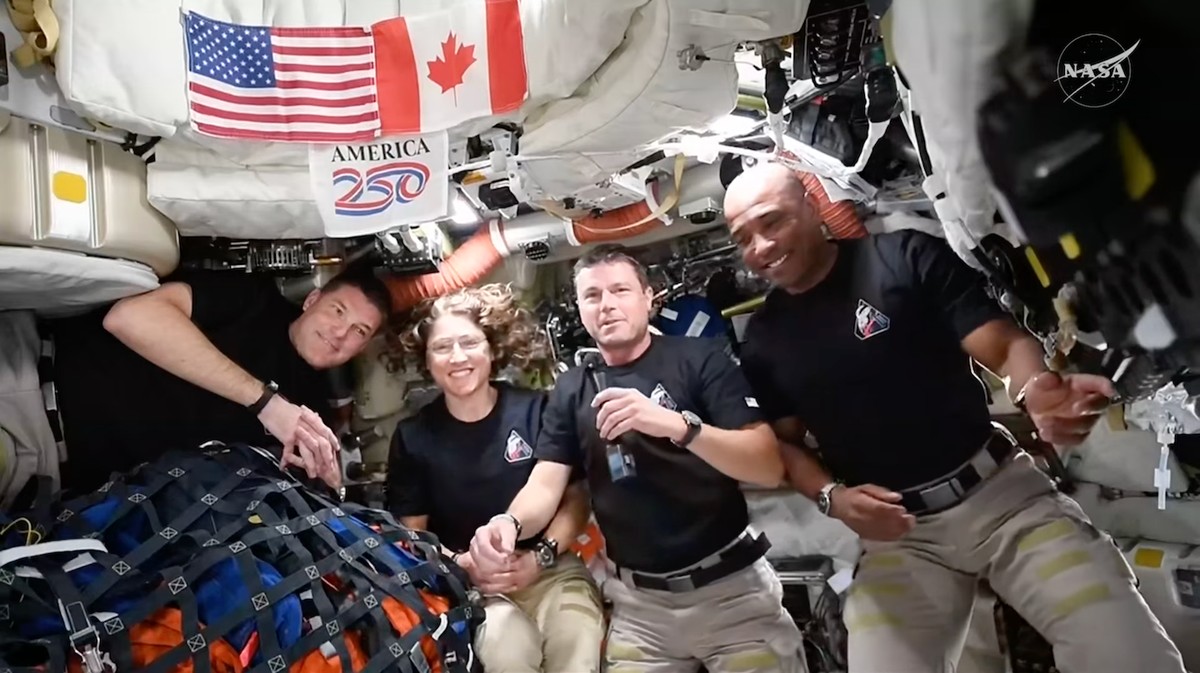
On Monday, the Artemis II crew achieved a milestone in human spaceflight, reaching a record distance from Earth. However, the celebratory atmosphere of their mission stands in sharp contrast to a looming budgetary battle in Washington that could fundamentally reshape the future of American space exploration.
Breaking Records in Deep Space
The Artemis II mission—comprising NASA astronauts Reid Wiseman, Victor Glover, Christina Koch, and Canadian Space Agency astronaut Jeremy Hansen —set a new benchmark for human endurance and distance. While orbiting the far side of the moon, the crew surpassed the distance record previously held by the Apollo 13 mission in 1970.
According to NASA, the crew reached a peak distance of 252,756 miles (406,771 kilometers) from Earth. During this historic transit, the crew also had the unique opportunity to observe a solar eclipse as the moon passed in front of the sun.
Presidential Recognition Amidst Budgetary Tension
Following the achievement, President Donald Trump placed a call to the Orion spacecraft to congratulate the crew. Accompanied by NASA Administrator Jared Isaacman, the President praised the mission’s significance, noting that the crew was performing feats “humans have really never seen anything quite like.”
Despite the celebratory tone, the call highlighted a growing tension between the administration’s public support for space milestones and its fiscal priorities. While the President referenced his first-term decisions to bolster space exploration and establish the U.S. Space Force, the White House’s proposed FY 2027 federal budget tells a different story.
The “Extinction-Level” Budget Threat
The proposed budget currently moving through Capitol Hill presents a significant challenge to NASA’s operational capacity:
- Overall Funding: A proposed reduction of nearly 25% of NASA’s total budget.
- Science Division: A proposed cut of nearly 50% to the agency’s science budget.
- Historical Context: If enacted, these cuts—when adjusted for inflation—would result in the smallest budget NASA has received since 1961.
This proposal follows a similar attempt in the FY 2026 budget, which was thwarted by rare bipartisan opposition in Congress. The current proposal has drawn sharp criticism from the scientific community.
“It would undermine and prevent NASA from being the world leader in space exploration,” warned Casey Dreier, chief of space policy at the Planetary Society, describing the cuts as an “extinction-level event for science.”
Conflicting Perspectives
The administration’s stance remains complex. While the budget cuts suggest a pivot away from heavy scientific investment, NASA Administrator Jared Isaacman has expressed support for the President’s fiscal policies. Isaacman maintains that the requested funding levels are sufficient for NASA to meet its “high expectations” and mission priorities.
The disconnect between the high-profile success of the Artemis II crew and the proposed austerity measures raises a critical question for the future of the agency: Can NASA maintain its global leadership in space exploration if its scientific foundation is significantly diminished?
Conclusion
While the Artemis II crew has successfully pushed the boundaries of human reach, the mission’s long-term legacy may be decided not in orbit, but in the halls of Congress, where a massive reduction in NASA’s science funding threatens to stall decades of progress.