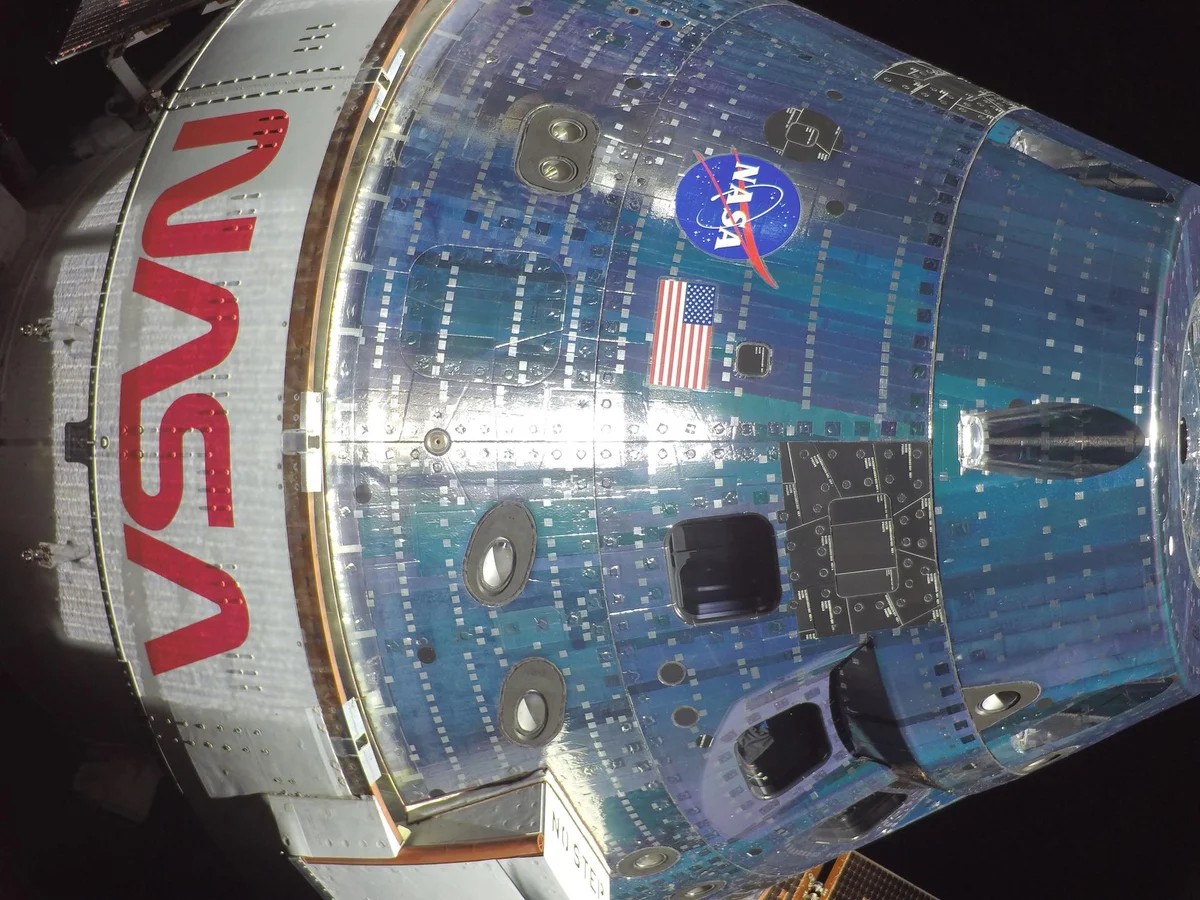
After completing a historic voyage around the Moon, the Artemis II mission is entering its most critical phase: the return to Earth. The crew of the Orion capsule, nicknamed Integrity, is now preparing for a high-stakes reentry sequence that will see them travel at hypersonic speeds before splashing down in the Pacific Ocean.
NASA has targeted the final splashdown for Friday at 8:07 P.M. EDT.
Pre-Reentry Preparations
The final hours of the mission are dedicated to precision and safety. The four astronauts—Reid Wiseman, Victor Glover, Christina Koch, and Jeremy Hansen —will begin their final operational day at 11:35 A.M.
The crew’s primary tasks include:
– Cabin Configuration: At approximately 1:50 P.M., the crew will stow all loose baggage and organize the cramped cabin to ensure everything is secured for the intense forces of reentry.
– Trajectory Correction: At 2:53 P.M., NASA may execute a final course-correction burn to ensure the capsule is perfectly aligned with its landing target.
– Safety Checks: The crew will undergo rigorous checklist reviews, ensuring all spacesuits are properly fitted and that every member understands their specific responsibilities during the descent.
The Reentry Sequence: Heat and Pressure
Reentry is one of the most dangerous maneuvers in spaceflight. As the capsule hits the Earth’s atmosphere, it must shed an incredible amount of kinetic energy.
The Descent Begins
The sequence of events leading to impact is tightly choreographed:
1. Service Module Separation: Roughly 42 minutes before splashdown, the Orion capsule will ditch its bulky service module.
2. Final Positioning: At 7:37 P.M., a quick burn will maneuver the capsule into the correct “attitude” (orientation) for atmospheric entry.
3. Atmospheric Entry: At 7:53 P.M., the capsule will hit the upper atmosphere at an altitude of 400,000 feet, traveling at a staggering 24,000 miles per hour.
Surviving the “Fireball”
During the first two minutes of descent, the capsule will plummet 200,000 feet. The rapid compression of air molecules in front of the craft will generate extreme temperatures reaching 5,000 degrees Fahrenheit (2,760 degrees Celsius).
To protect the crew, the Orion capsule utilizes a specialized heat shield designed to char and melt away, carrying the intense heat with it and preventing it from reaching the interior. This process creates a six-minute communications blackout, during which the crew will be unable to speak with Mission Control.
Slowing Down: Parachute Deployment
To transition from hypersonic speeds to a safe landing, the spacecraft must use a combination of thrusters and parachutes.
- Energy Dissipation: The spacecraft will use its thrusters and perform controlled rolls to bleed off excess energy.
- Subsonic Transition: By the nine-minute mark, the capsule will have slowed to just under the speed of sound at an altitude of 35,000 feet.
- The Parachute Sequence:
- Drogue Parachutes: Deployed at the 10-minute mark to stabilize the craft and slow it from 24,000 feet to 6,800 feet.
- Pilot Parachutes: These deploy next to guide the larger chutes.
- Main Parachutes: The final set of parachutes will deploy to bring the capsule down for its final 5,000 feet at a gentle speed of approximately 17 mph.
Mission Conclusion
The mission concludes with a targeted splashdown in the Pacific Ocean, just off the coast of San Diego, California, at 8:07 P.M. EDT. In the span of just 13 minutes of descent, the crew will have traversed 1,701 nautical miles to reach home.
Summary: The Artemis II return is a high-speed transition from the vacuum of space to the Earth’s atmosphere, requiring precise heat shielding and a multi-stage parachute deployment to ensure a safe landing in the Pacific.