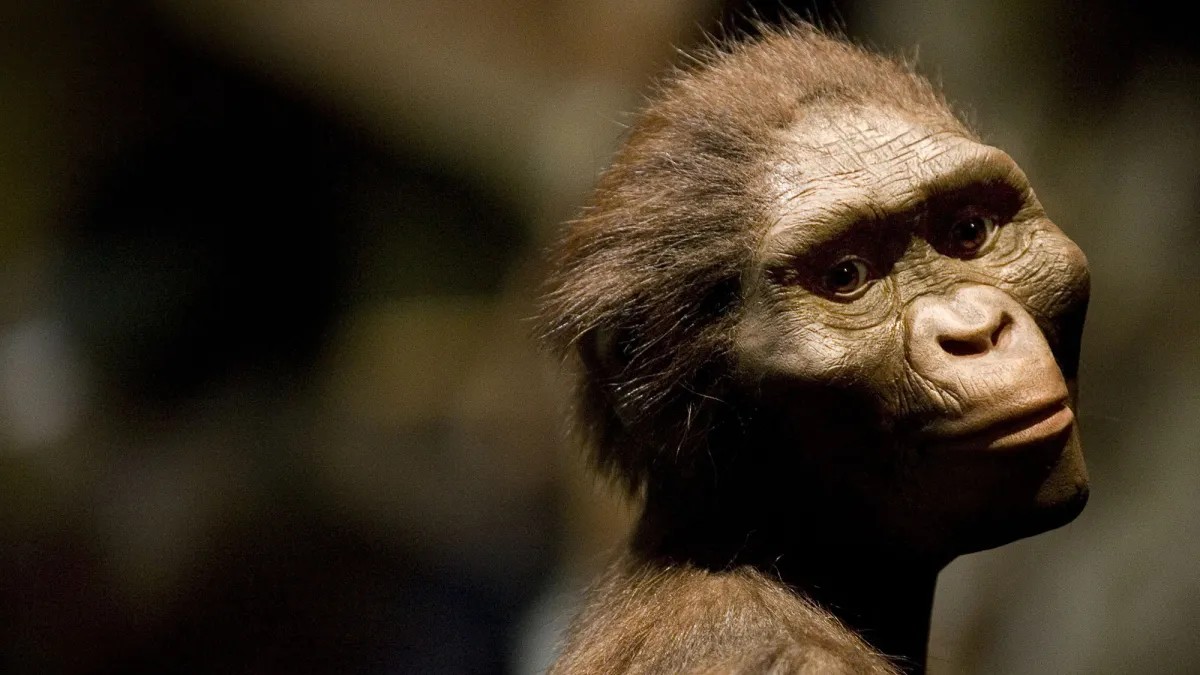
While most vertebrates—from kittens to whales—rely on tails for balance, communication, or swimming, humans are a notable exception. Although all members of the phylum Chordata are biologically required to have a tail structure, humans only possess a vestigial one during the first eight weeks of embryonic development.
The reason for this absence isn’t a recent change; it is the result of an evolutionary shift that occurred millions of years before the first human ever walked the Earth.
Tracing the Ancestry of Taillessness
To understand why humans lack tails, we have to look far beyond our own genus. The divergence between tailed monkeys and the ancestors of apes occurred roughly 25 to 30 million years ago. Following this split, various species of tailless apes began to emerge, making it difficult for scientists to pinpoint the exact moment the tail disappeared from our specific lineage.
However, the fossil record provides crucial clues. By examining the sacrum —the bony structure at the base of the spine—paleontologists can determine if an animal was capable of supporting a tail. In tailed mammals like cats, the sacrum connects to a series of tail vertebrae. In humans and apes, the sacrum ends in a small, blunt tip.
Key fossil evidence includes:
- Ekembo (Ekembo heseloni ): Dating back 17 to 20 million years, these Kenyan fossils reveal a creature that likely walked on all fours. Despite having long, flexible lower backs, their sacrums lacked the structure necessary to support a tail.
- Nacholapithecus: Appearing around 15 million years ago, this Miocene-era ape also shows fossilized sacrums that would have been incapable of supporting a tail.
These findings suggest that by the time the hominid lineage began to diverge, our ape ancestors had already transitioned to a tailless existence.
Form Follows Function: Why the Tail Was Dropped
Evolution is rarely about losing something for no reason; it is usually about efficiency. In nature, every biological feature comes with a metabolic cost. If a feature provides more risk than reward, it is often phased out.
The disappearance of the tail in early apes likely relates to a shift in locomotion and survival strategies.
1. A Shift in Movement
Modern primates like chimpanzees and gorillas are specialized for hanging and swinging, possessing long arms and short legs. However, Miocene apes were different. They had limbs of roughly equal length and moved deliberately on all fours. Unlike the swift, swinging movement of modern monkeys—where a tail acts as a vital counterbalance—these early apes moved slowly and carefully through the canopy.
2. Energy and Risk Management
For an animal moving cautiously through branches to reach fruit, a tail may have offered no functional advantage. Instead, it may have become a biological liability :
* Energy Cost: Growing and maintaining a tail requires caloric energy that could be better spent on other bodily functions.
* Predation Risk: A long, dangling tail provides an easy target for predators to grab during a climb.
“They were climbing, but they were doing it deliberately,” explains Carol Ward, a professor of integrative anatomy at the University of Missouri. “The tail just didn’t offer an advantage.”
Conclusion
The absence of a tail in humans is not a “missing” piece of our anatomy, but rather a specialized evolutionary outcome. Our ancestors traded the balance provided by a tail for a more deliberate, energy-efficient way of moving through the world, setting the stage for the unique physical trajectories of the ape and human lineages.