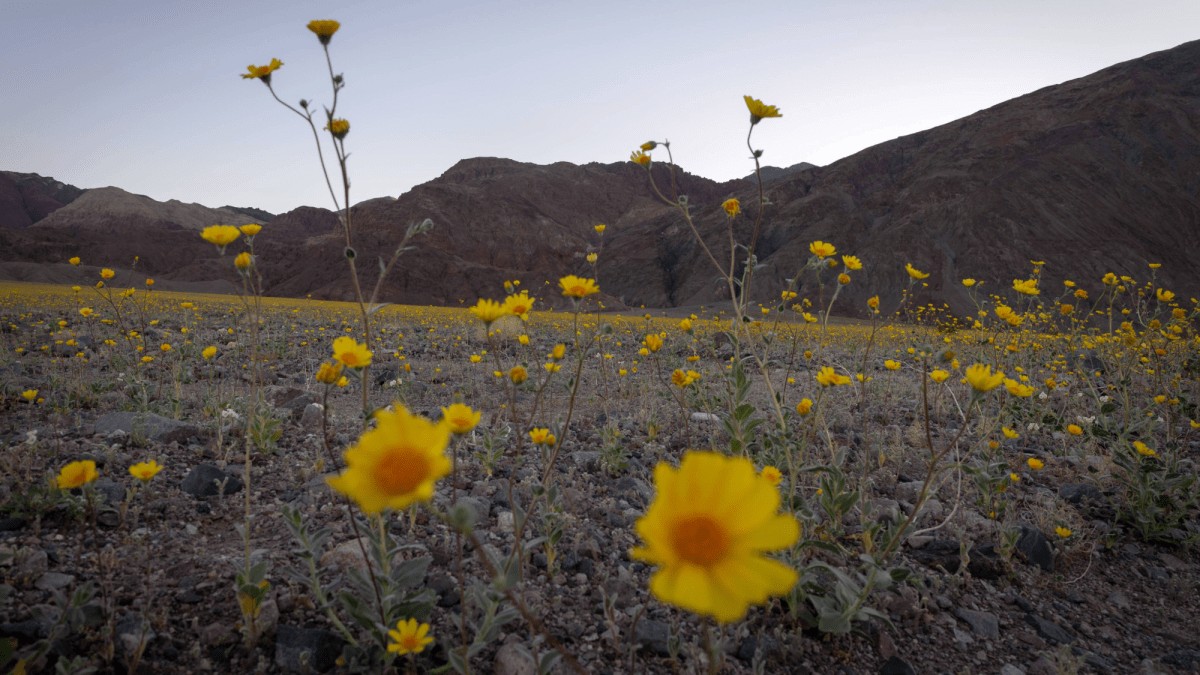
Death Valley National Park is experiencing conditions ripe for its most significant wildflower bloom since 2016, potentially transforming one of Earth’s harshest environments into a vibrant spectacle of color. While the term “superbloom” can be inflated by social media hype, the current conditions suggest a substantial floral display is underway, with blooms already visible and more expected to emerge through June.
The Ingredients for a Desert Bloom
Wildflower displays in Death Valley are rare events requiring a precise combination of rainfall, temperature, and wind patterns. These blooms don’t happen every year; instead, they tend to occur roughly once a decade, with notable years including 2016, 2005, and 1998.
The first key factor is sufficient rainfall spread across the fall, winter, and spring. Gentle, soaking rains are critical for breaking down the protective coating on wildflower seeds, allowing them to germinate. Subsequent, evenly spaced storms throughout the season are also essential, with El Niño patterns bringing higher-than-average rainfall to the region being particularly favorable.
Secondly, moderate temperatures play a crucial role. While Death Valley is notorious for scorching summers, cooler winter temperatures allow seeds to sprout and establish roots. As the spring sun warms the soil, these root systems strengthen, enabling rapid growth and blooming.
Finally, wind is a wildcard. While some wind is necessary for seed dispersal, strong spring storms without additional rain can quickly destroy delicate sprouts by dehydrating them. Desert plants often have adaptations like waxy or hairy leaves to conserve moisture and withstand wind exposure.
The Bloom Timeline
Current blooms are dominated by desert gold (Geraea Canescens), but other species are also emerging. Low-elevation flowers are expected to persist through mid-to-late March, while higher-elevation blooms may last from April through June. The National Park Service provides updated bloom locations on its website.
The Risks of Overexposure
The spectacle of a desert superbloom attracts visitors, but past events have shown that crowds can cause damage to fragile ecosystems. The 2016 superbloom drew over 209,000 visitors, leading to traffic congestion and environmental harm. More recently, a poppy bloom near Elsinore, California, in 2019 saw irresponsible behavior from some tourists.
Experts caution against hyperbole surrounding “superblooms,” with some botanists arguing that current displays may be localized and less widespread than in previous years. Regardless, responsible park etiquette is critical: stick to designated trails, avoid picking flowers, and park only in designated areas.
“Whether it rises to the status of a superbloom is in the eye of the beholder,” says Naomi Fraga, a botanist at California Botanic Garden. The term often creates unrealistic expectations.
The Death Valley bloom is a reminder of nature’s resilience, but its preservation depends on mindful visitation. The delicate balance between spectacle and sustainability will determine whether this rare event remains a wonder for years to come.