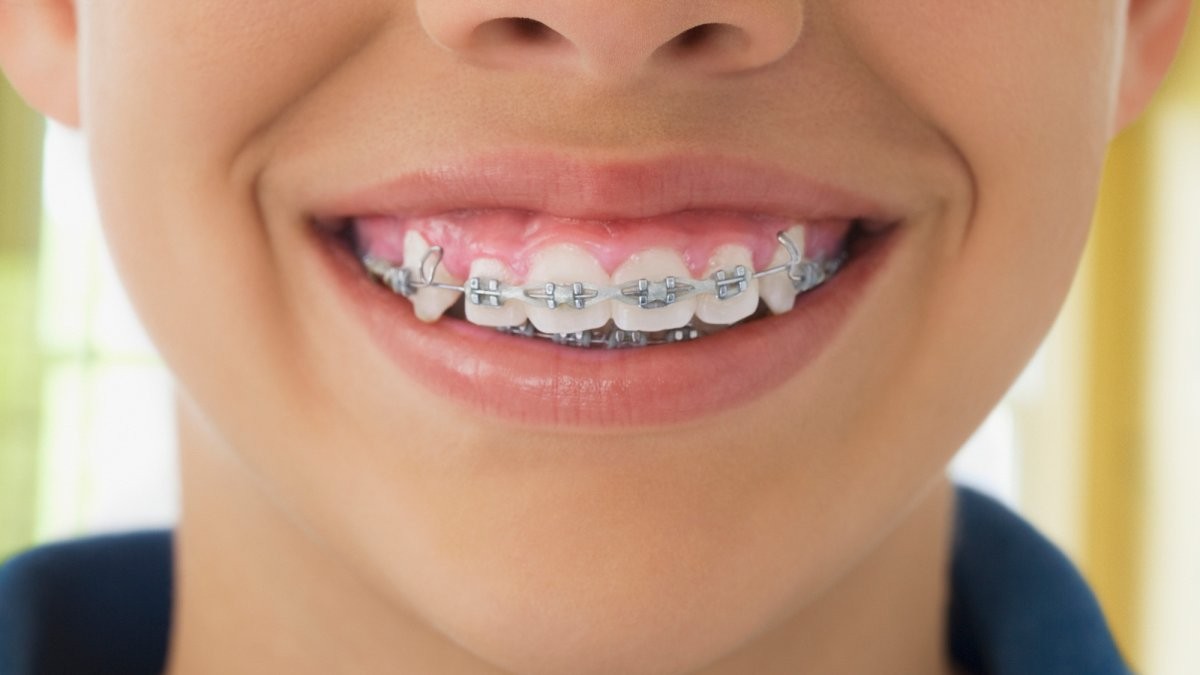
For hundreds of thousands of years, humans didn’t require orthodontic intervention to straighten their teeth. Today, braces are almost a rite of passage. This isn’t a random shift; it’s the result of how modern diets have reshaped our faces over generations. The answer isn’t about teeth changing – it’s about jaws shrinking.
The Ancient Jaw: Built for Tough Food
Ancient humans ate fibrous, tough foods that required constant, vigorous chewing. This physical exertion stimulated jaw growth, leading to wider, stronger bone structures with ample space for all teeth. Unlike modern diets, their jaws didn’t have the luxury of soft foods; they were constantly working.
The Modern Mismatch: Soft Food, Smaller Jaws
As humans transitioned to softer, processed foods – applesauce, peanut butter, and cooked starches – the need for intense chewing diminished. Jaws stopped growing as large, but teeth remained the same size. This created an evolutionary mismatch: teeth trying to fit into a space that was simply too small. Crowding, overlapping, and twisted teeth became common.
Beyond Straight Teeth: Health Implications
The consequences extend beyond aesthetics. Smaller jaws are linked to impacted wisdom teeth and even sleep apnea. When jaws shrink, there’s less room for the tongue and airway structures, increasing the risk of breathing issues. Braces aren’t just cosmetic; they address structural problems that didn’t exist for our ancestors.
A Historical Perspective
Dental care isn’t new. Evidence suggests people attempted tooth correction as far back as 7,000 BC in the Indus Valley Civilization. However, these early methods were primitive compared to modern orthodontics. The first recognizable orthodontic device, the Bandeau, emerged in the 1700s – a metal horseshoe worn in the mouth to expand the palate.
The Rise of Modern Orthodontics
By the late 1800s and early 1900s, orthodontics began to standardize with systems developed by Edward Angle, who categorized crooked teeth and helped refine treatment methods. Metal brackets and wires became the norm, replacing earlier, more brutal interventions.
The Evolutionary Price of Comfort
Modern braces aren’t a failure of evolution; they’re a response to it. The shift to soft diets has fundamentally altered our facial structure. While our teeth remain genetically consistent, our jaws haven’t adapted to the ease of modern eating. The result is a widespread need for intervention to correct the mismatch.
In conclusion, modern humans require braces not because our teeth have changed, but because our diets have reshaped our jaws. This mismatch is a direct consequence of evolutionary adaptation to softer foods, highlighting how lifestyle changes can impact even fundamental biological structures.