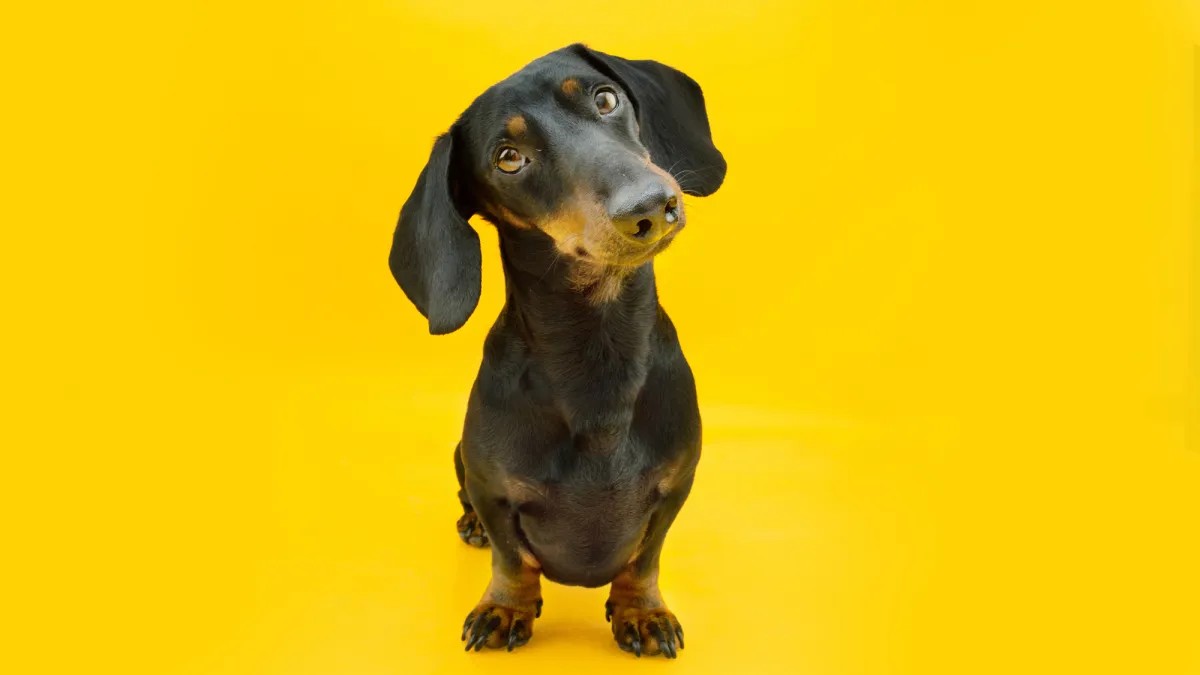
We have all seen the viral videos: a human says something to their pet, and the dog responds with a sudden, adorable tilt of the head, ears perked and eyes locked on their owner. While these moments are widely celebrated for their “cuteness,” recent scientific research suggests that the head tilt is much more than a charming quirk. It is actually a sophisticated sign of cognitive engagement and linguistic processing.
A Window Into the Canine Mind
For tens of thousands of years, dogs have lived alongside humans, evolving into “sentinels of the human experience.” Unlike many other domesticated animals, dogs have developed a unique ability to parse human speech in ways that closely mirror our own.
Recent studies, including research by Courtney Sexton of the Virginia-Maryland College of Veterinary Medicine, suggest that the head tilt is often a physical response to a dog trying to make sense of what you are saying. It is not just a reaction to noise; it is a reaction to meaning.
How the Brain Processes Language
Research using MRI brain imaging has revealed fascinating parallels between canine and human neurology. When dogs hear familiar words, they activate the left hemisphere of their brain—the same area humans use for language processing. When they hear unfamiliar words or specific tones, the right hemisphere becomes more active.
A 2025 study involving 103 dog owners provided deeper insights into this behavior:
– The Trigger: Dogs tilted their heads most frequently when hearing familiar words delivered with warmth and excitement.
– The Direction: Most dogs tilted to the right. Because the brain processes sensory input contralaterally (the left side handles the right side of the body), a rightward tilt suggests the dog is engaging its left hemisphere to process language.
– Gender Differences: Male dogs in the study tended to tilt more and more sharply to the right. This may reflect a pattern similar to humans, where men often rely more heavily on one hemisphere for language, while women tend to use both hemispheres more bilaterally.
Is It Language or Just Surprise?
While the connection to language is strong, scientists are still investigating whether the tilt is exclusively about communication. Some research shows dogs also tilt their heads when startled by sudden movements, such as a jack-in-the-box.
This raises two scientific possibilities:
1. Novelty/Surprise: The tilt might be a reaction to something unexpected.
2. Cognitive Offloading: The gesture could be a way for the brain to “reset” or clear space to process new, complex information—much like a human furrowing their brow while concentrating.
However, because the tilting was most prominent during social-language interactions in recent studies, researchers believe language processing is the primary driver.
The “Cuteness” Factor: Evolution vs. Intent
It is true that humans find head-tilting dogs irresistible. But experts argue that dogs aren’t performing the tilt to manipulate us into giving them treats. Instead, the “cuteness” is a byproduct of neoteny.
Through millennia of domestication, dogs have retained juvenile physical traits—large eyes and soft facial features—that trigger a nurturing response in humans. Just as human infants evolved these traits to ensure survival through adult care, dogs have developed a toolkit that keeps us invested in them.
The head tilt isn’t a calculated trick; it is an outward sign of an active, thinking mind.
“They are processing, they’re thinking, they’re responding… The head tilt is the outward sign of that. It’s not just cute.”
Conclusion
The canine head tilt is a sophisticated communicative tool that signals a dog is actively working to decode human language. Far from being a mere aesthetic quirk, it represents the deep evolutionary bond and cognitive complexity shared between humans and dogs.