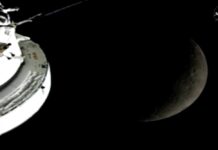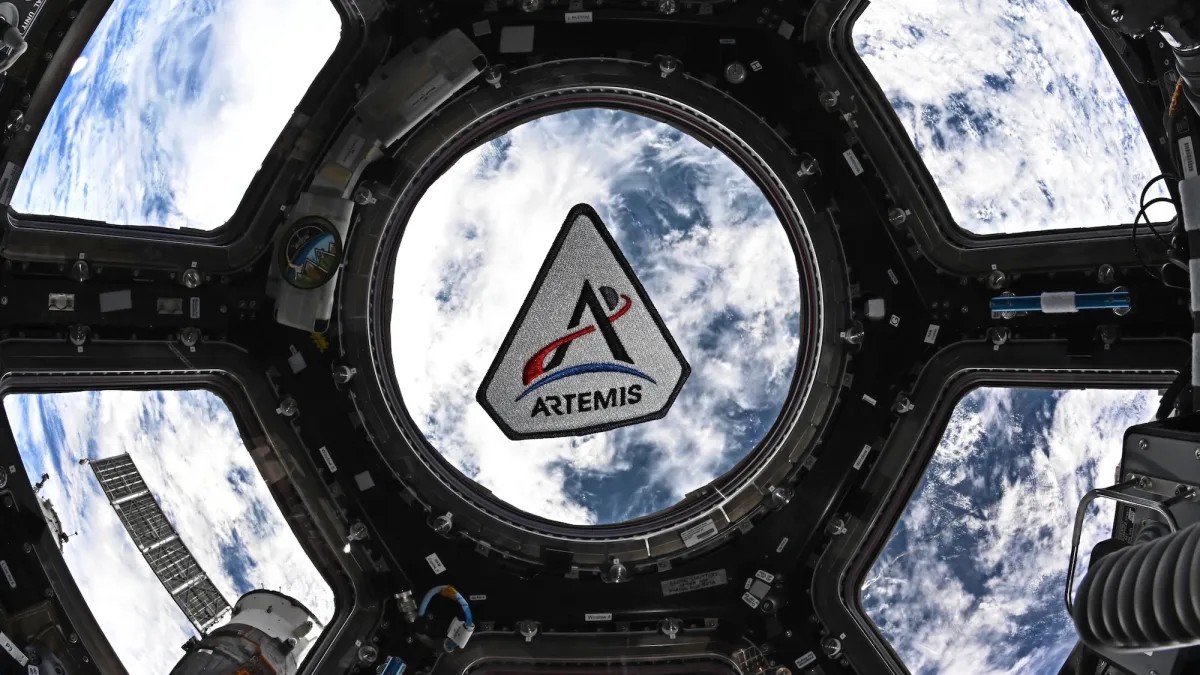
The Artemis II crew has successfully completed their historic lunar flyby, returning with breathtaking imagery of the Moon and Earth. However, as these photos circulate online, a recurring question has emerged among observers: If space debris is such a massive threat to our orbit, why isn’t any of it visible in these high-resolution shots?
While it might seem like a glaring omission, the absence of visible trash in the mission’s photography is not a sign that the problem doesn’t exist—it is a matter of physics, scale, and timing.
The Growing Threat: The Kessler Syndrome
To understand why people are asking this, one must recognize the severity of the orbital debris crisis. Astronomers have long warned about the “Kessler cascade” (or Kessler Syndrome). This is a theoretical scenario where the density of objects in Low Earth Orbit (LEO) becomes so high that a single collision triggers a domino effect of further crashes.
Because debris travels at speeds exceeding 17,500 miles per hour, even tiny fragments carry immense kinetic energy. A chain reaction of collisions could create a cloud of junk so thick that it renders certain orbits unusable, potentially crippling satellite communications, GPS, and future space exploration.
Why Debris Stays “Invisible” to Cameras
If the debris is so dangerous, why can’t the Artemis II astronauts simply snap a photo of it? There are three primary reasons:
1. The Scale Problem
The vast majority of orbital debris is incredibly small. While there are millions of objects larger than a centimeter, there are an estimated 130 million smaller fragments swirling around the planet. To a camera lens—or even the human eye—these tiny particles are virtually impossible to detect against the backdrop of space.
2. The Speed Factor
Both the astronauts in the Orion capsule and the debris itself are moving at extreme velocities. Capturing a clear image of a small object moving at thousands of miles per hour is a massive technical challenge. To visualize the difficulty, imagine trying to photograph a single pebble on a highway from 10 miles away while driving at high speed; the math simply doesn’t favor a clear shot.
3. Altitude and Focus
The highest concentration of space junk is located between 466 and 621 miles above Earth. During the critical phases of a mission, astronauts are focused on navigation, life support, and the immense technical demands of flight. The window of opportunity to capture a specific, fleeting moment of debris passing the capsule is statistically miniscule.
Safety in the Shadows
The absence of visible junk does not mean the crew was in danger. The Artemis II mission and other spacecraft are built with this reality in mind.
- Engineering Resilience: Habitats like the International Space Station (ISS) are engineered to withstand impacts from objects up to one centimeter in diameter.
- Tracking Technology: NASA’s Orbital Debris Program Office uses sophisticated computing models and tracking technology to monitor the most dangerous objects, allowing missions to navigate safely around known threats.
While space junk is a legitimate environmental and logistical challenge for the future of orbital flight, its invisibility in photos is a result of the sheer vastness of space and the microscopic scale of the debris, rather than a lack of presence.
Conclusion
The lack of visible debris in the Artemis II photos is a testament to the scale of our solar system and the physics of high-speed orbital motion. While the “space junk” problem is a very real concern for long-term orbital sustainability, it remains a hidden danger that requires high-tech tracking rather than visual observation.