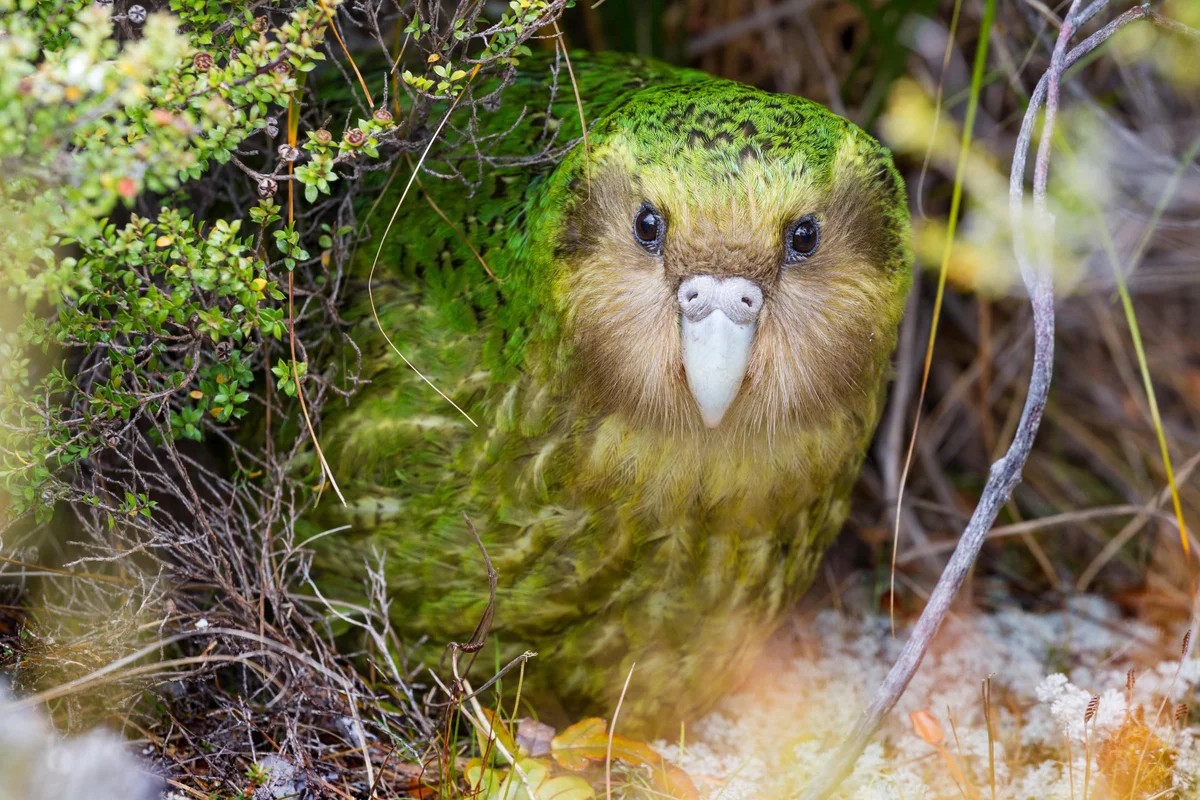
A rare, abundant crop of rimu berries in New Zealand’s forests has triggered a significant breeding surge among the critically endangered Kākāpō, the world’s largest parrot. This year’s boom in reproduction is a critical step toward stabilizing a species that once numbered just 51 individuals in 1995.
The Kākāpō: A Unique Species
The Kākāpō is an unusual bird, described as having the face of a Muppet and the awkward flight style of “a brick.” These nocturnal, bright-green parrots can weigh as much as a house cat and live for over 90 years. Their survival, however, is intimately tied to the cyclical fruiting of the rimu tree.
The Role of Rimu Berries
Kākāpō reproduction is almost entirely dependent on these berries, which appear in large quantities only every two to four years. When the rimu trees produce a bumper crop, the Kākāpō enter a breeding frenzy. Male birds create “booming bowls” – earthen structures used to amplify their low-frequency courtship calls, which can travel for miles.
Breeding Successes in 2026
This year, nearly all reproductively mature female Kākāpō have bred, resulting in approximately 240 eggs. While not all will hatch or survive, scientists have already recorded 26 living chicks as of March 3rd. The population increase is partially due to a few exceptionally fertile individuals, including a male named Blades, who has fathered 22 chicks since 1982 and was moved to “Bachelor Island” to prevent overrepresentation of his genes.
Maternal Care and Long-Term Dynasties
Kākāpō mothers rear their chicks alone, climbing up to 100 feet into the forest canopy each night to gather a pound of berries per chick daily. Some females have reproduced for over 40 years, creating strong genetic lineages. One matriarch, Nora, is expected to become a mother and great-great-grandmother this season. Live nest cams, such as the one featuring Rakiura, allow observation of this process in real time.
Conservation Efforts and Future Prospects
The Kākāpō’s recovery has relied heavily on predator-free islands managed by the Ngāi Tahu people, who consider the species a sacred treasure. The current population of around 236 birds is now facing pressure to expand beyond these small refuges. Conservationists are working to restore larger habitats by eradicating invasive predators like cats, dogs, and stoats, which historically decimated Kākāpō populations. The goal is to reach 300 individuals, a major milestone for this once-teetering species. The Ngāi Tahu have even requested that some chicks born this year not be named, allowing them to integrate more naturally into the wild.
The 2026 breeding cycle represents a turning point for the Kākāpō, signaling a renewed hope for the long-term survival of this unique and endangered species.