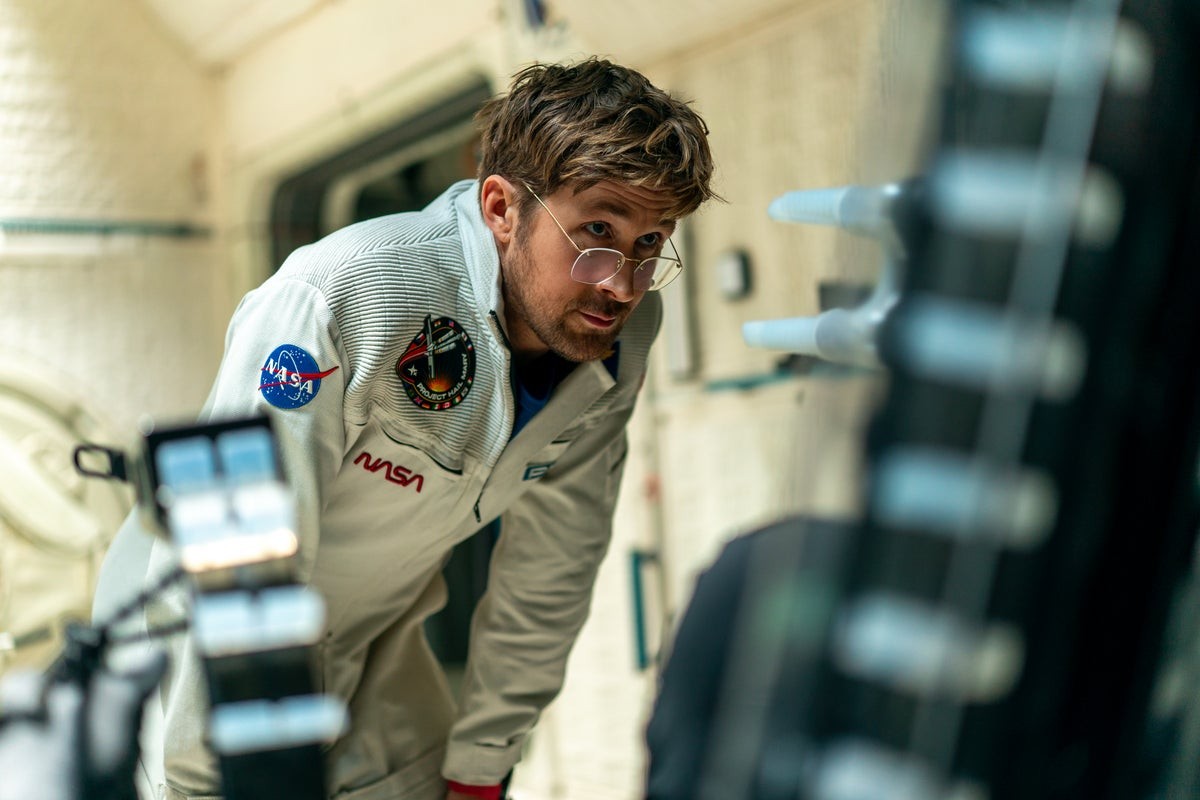
The new film Project Hail Mary depicts a startling premise: an astronaut awakened from a coma-like sleep years into a deep-space mission. But how grounded in reality is this idea? While not quite a medically induced coma, the concept of putting humans into long-term suspended animation for space travel is actively being researched—and may be closer than many think.
The Science of Slowing Down Life
The movie’s premise isn’t entirely fictional. The author, Andy Weir, emphasizes that the science behind Project Hail Mary largely aligns with established physics, excluding some speculative elements like sun-eating microbes. The core idea—slowing down the body’s functions to reduce resource needs during long journeys—is rooted in natural phenomena.
Many animals already do this. Bears, hamsters, and ground squirrels enter states of torpor or hibernation, dramatically reducing their metabolic rates. This means lower oxygen consumption, minimal food or water requirements, and prolonged survival in harsh conditions. The key is that life doesn’t stop, it merely slows down.
Synthetic Torpor: A Human Possibility?
Researchers believe this could be replicated in humans through a process called synthetic torpor. Matteo Cerri, an associate professor of physiology at the University of Bologna, leads a European Space Agency group studying how to induce this state.
The benefits are clear: lower metabolic demands, potentially extended lifespans, and crucial protection against space radiation—currently the biggest obstacle to long-term exploration. Lower oxygen levels in tissues could increase radiation resistance, as the problem with radiation is that there is no solution at the moment.
Experiments have already shown success in animals. Cerri’s team has induced torpor in rats by manipulating brain stem activity, effectively “tricking” their bodies into slowing down. Human trials are currently deemed too risky, but the principle has been proven.
Cryosleep: The Frozen Future?
Another sci-fi staple—cryosleep, or freezing bodies for later revival—is also under investigation. While no one has successfully done this yet, researchers point to biological precedents. Tardigrades can enter a glasslike state, and Siberian salamanders survive frozen for years.
Alexander German, a molecular neurologist, believes reversible human cryostasis is “technically possible.” His team recently recovered brain activity in frozen mouse brain slices, suggesting that cellular revival is not just theoretical. The main hurdle remains preventing ice crystals from damaging cells during freezing and thawing.
The Challenges Remain
The road to human suspended animation isn’t easy. Drugs used to induce comas can become toxic over long periods, and the expansion of ice crystals during freezing can rupture cells. These problems need solutions before widespread adoption.
But the potential rewards are immense. If scientists can overcome these obstacles, long-duration space travel—even interstellar journeys—would become far more feasible. Deep sleep may not just be science fiction; it could be humanity’s ticket to the stars.