NASA’s Artemis II mission is rapidly approaching a historic lunar flyby, set to occur on Monday, April 6th. The four astronauts aboard—Victor Glover, Jeremy Hansen, Christina Koch, and Reid Wiseman—crossed the halfway mark to the moon on Saturday, preparing for a five-hour observation period of the lunar far side, a region largely unseen by human eyes.
Unprecedented Lunar Observations
The crew will have the unique opportunity to study features previously observed only through satellites or during lunar night flybys. Among the primary targets is the Orientale basin, a massive impact crater spanning three times the area of Massachusetts. This geological formation is critical for understanding impact processes throughout the solar system, a phenomenon common to nearly every celestial body. As Kelsey Young, NASA’s lead for the mission, explained, “This is an impact basin that has played such a critical role in not just lunar science, but in planetary and solar system science.”
The astronauts have undergone rigorous training, including flashcard drills, to identify key lunar features on sight. They will also document the rare sight of a total solar eclipse as the moon obstructs the sun, and capture high-resolution images of the far side’s topography and coloration, details satellites often miss.
Precision Engineering and Unexpected Plumbing Issues
The Space Launch System (SLS), the rocket responsible for launching Artemis II, has demonstrated remarkable accuracy. John Honeycutt, the SLS manager, noted the capsule achieved a 99.92% on-target launch trajectory, a “big bullseye” in his words. However, the mission is not without its challenges. The Orion crew capsule experienced a partial blockage in its wastewater dump system, likely caused by ice accumulation in the cold environment.
Debbie Korth, Orion’s deputy program director, described the team’s efforts to thaw the lines by tilting the capsule toward the sun, but the issue is not fully resolved. The crew is currently utilizing backup “collapsible contingency urine devices” until the system is operational. Plumbing problems in space are not new, Korth noted, having been a recurring challenge since the shuttle program.
A Symbolic Journey
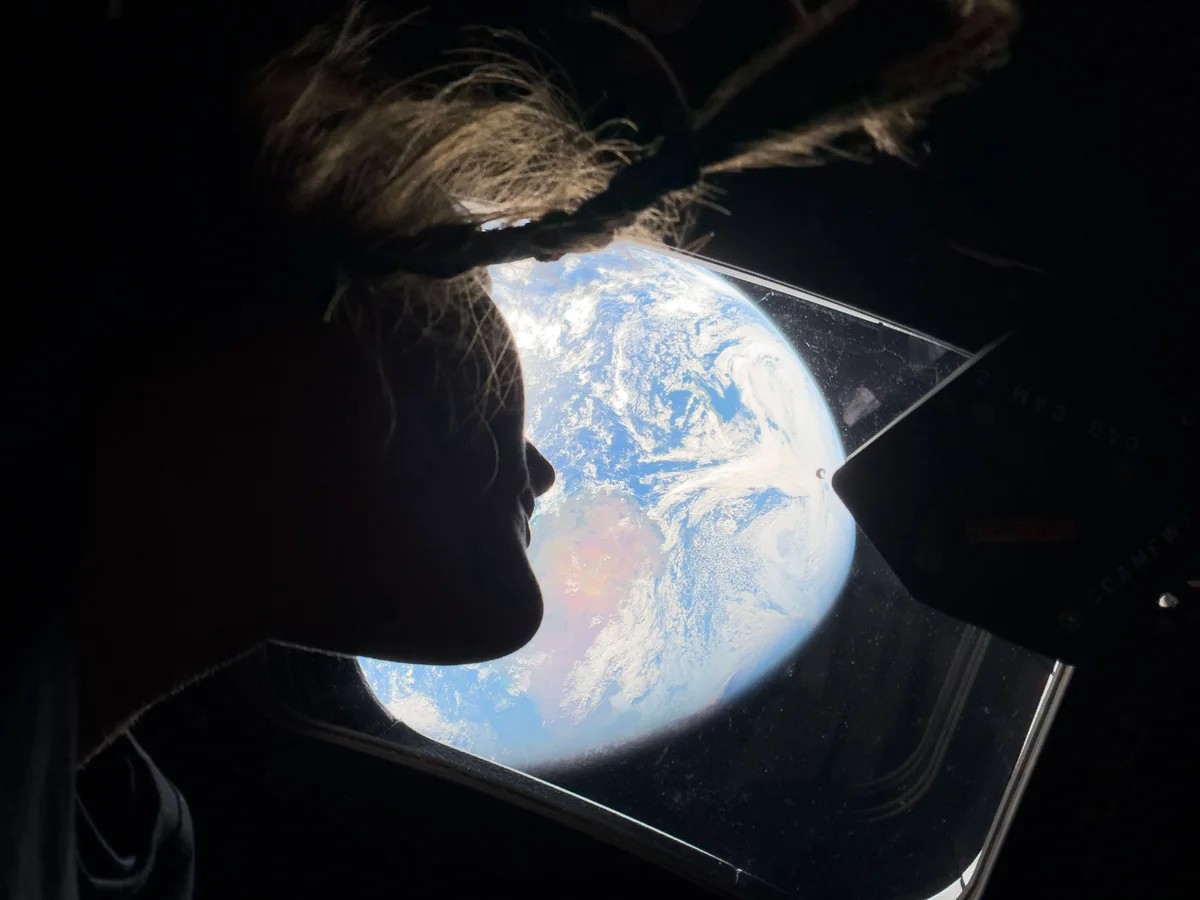
Despite technical hurdles, the mission carries profound symbolic weight. Astronaut Christina Koch, speaking in an interview, expressed the emotional impact of viewing Earth from space: “When I saw Earth for the first time on its own out the window, I was struck by the blackness around it… What an anomaly that is.” The Artemis II mission is a reminder of humanity’s place in the vast universe and the fragility of our planet.
The Artemis II lunar flyby is poised to provide unprecedented data and insights into the moon’s far side, while also serving as a testament to human engineering and resilience in the face of unforeseen challenges.