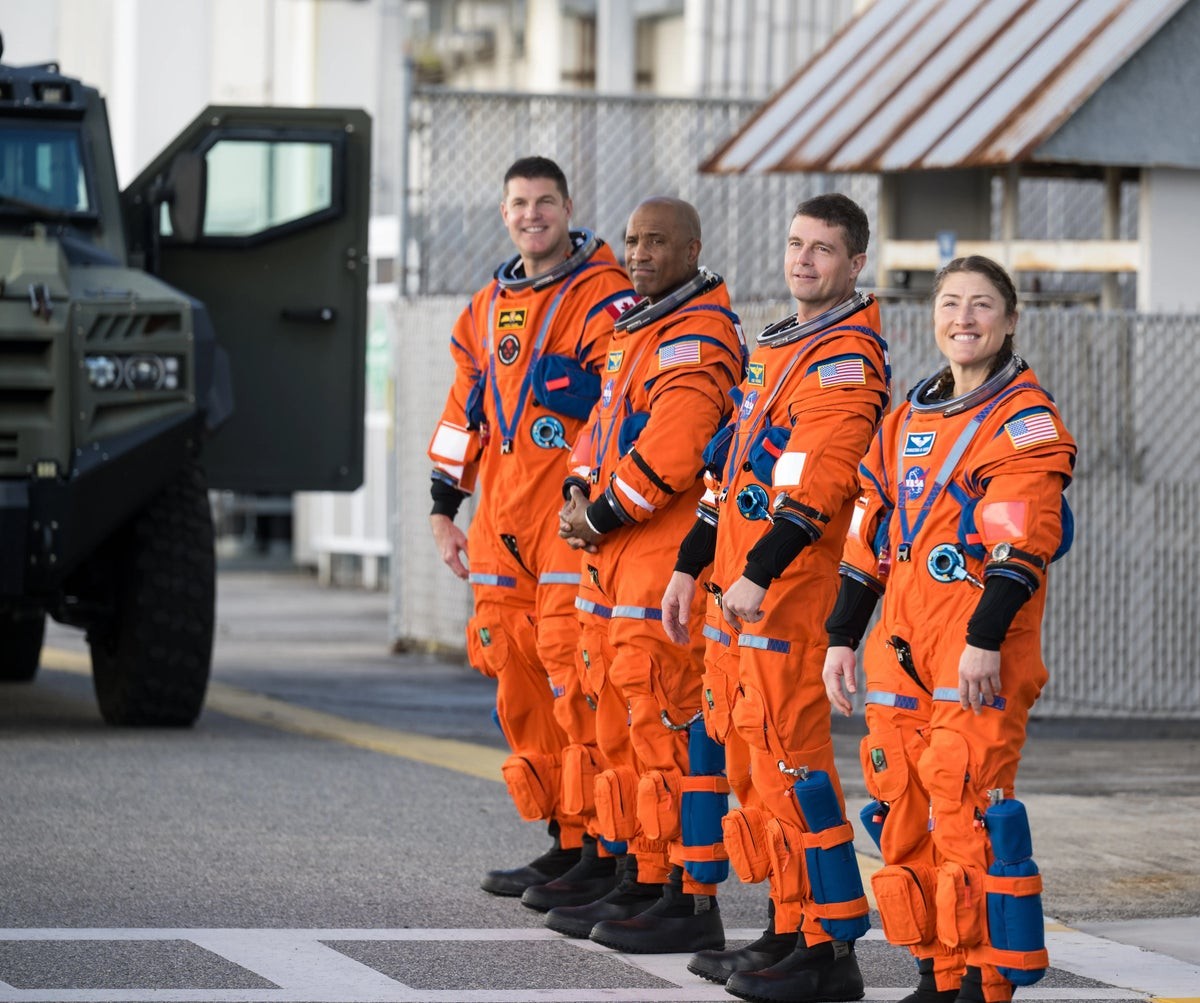
NASA is gearing up for the Artemis II mission, a landmark crewed flight to the Moon scheduled for launch as early as April 1st. This mission represents humanity’s first venture beyond Earth orbit in over 50 years, since the Apollo 17 mission concluded in 1972. Despite delays and technical challenges, officials and astronauts alike express confidence in the readiness of both the crew and the hardware.
Mission Readiness and Potential Delays
The Space Launch System (SLS) rocket and Orion crew capsule have faced multiple postponements this year due to issues identified during testing. NASA has identified backup launch windows throughout April and later in 2024, acknowledging the possibility of further delays if necessary. As Lori Glaze, NASA’s Exploration Systems Development Mission Directorate Acting Associate Administrator, stated at a recent press conference, “Everything points toward the mission being ready to go.” Shawn Quinn, NASA’s Exploration Ground Systems Program Manager, added that current weather forecasts show an 80% probability of favorable conditions this week.
Crew Preparedness and Quarantine Protocols
The four-person crew—Reid Wiseman, Christina Koch, Victor Glover, and Jeremy Hansen—has been in quarantine since March 18th to minimize the risk of contamination. The astronauts recognize the possibility of further delays, but emphasize their readiness to proceed when the vehicle confirms its operational status. Christina Koch stated, “We will go when this vehicle tells us it’s ready, when the team is ready to go.”
Scientific Objectives and Future Lunar Ambitions
The ten-day Artemis II mission aims to validate critical technologies for future lunar missions, including Artemis III and Artemis IV, as well as long-term plans for establishing a permanent human presence on the Moon. A primary goal is to observe the far side of the Moon in greater detail than previously possible. While satellites and earlier Apollo missions have provided limited views, the Artemis II crew is expected to witness lunar surface features no human has ever seen before.
Risk Mitigation and Collaborative Approach
Mission captain Reid Wiseman underscored the crew’s awareness of the inherent risks and their commitment to a cautious approach. He emphasized the importance of trust among the team, stating, “We’re going to go slow, and we have the ultimate trust in each other, and that’s how we will get through this.” This collaborative mindset will be critical in navigating the challenges of deep-space travel.
The Artemis II mission is not merely a symbolic return to the Moon; it represents a crucial step toward sustained lunar exploration and the long-term goal of establishing humanity’s presence beyond Earth.