


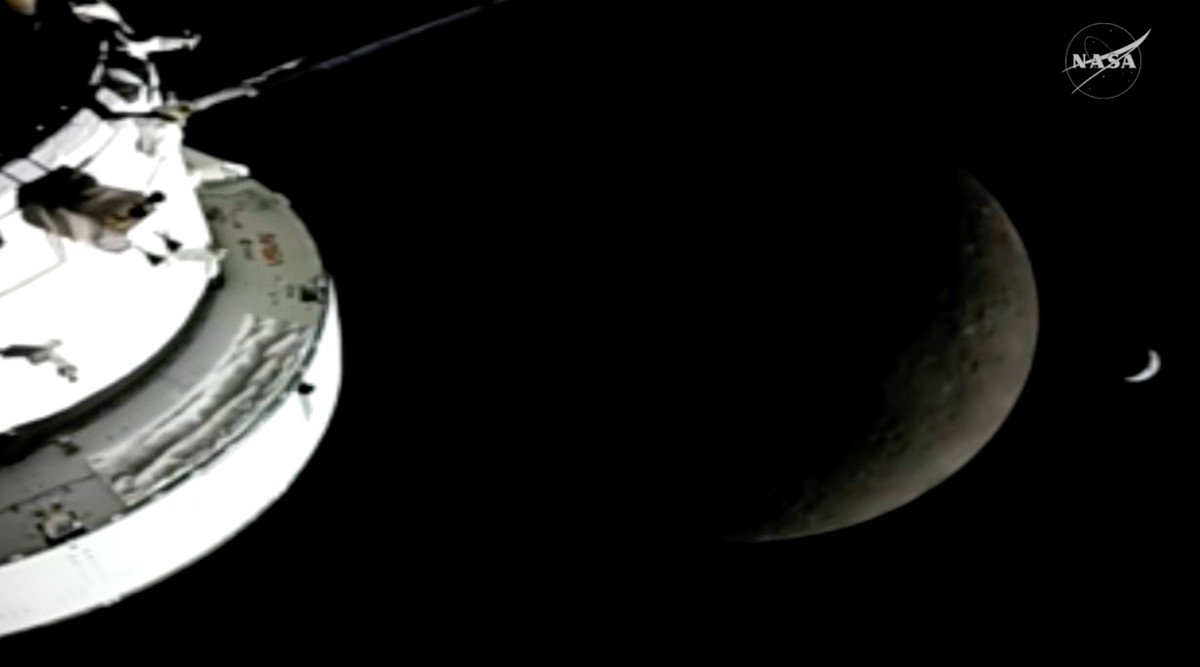
The Artemis II mission has officially rewritten the record books for human spaceflight. On Monday, April 6, a crew of four astronauts reached a distance from Earth that surpassed even the most daring moments of the Apollo era, marking a profound milestone in our journey to explore the lunar frontier.
A Record-Breaking Journey
At approximately 7:02 P.M. EDT, the Orion spacecraft, carrying astronauts Reid Wiseman, Victor Glover, Christina Koch, and Canadian Space Agency astronaut Jeremy Hansen, reached a peak distance of 252,756 miles (406,771 kilometers) from Earth.
This feat is not just a milestone for this specific mission; it is a historic achievement for humanity. The crew surpassed the previous record for the farthest distance humans have traveled from our home planet—a record held since 1970 by the Apollo 13 crew during their emergency lunar loop. The Artemis II crew exceeded that distance by roughly 4,111 miles (6,616 kilometers).
The “Silent” Milestone
The achievement occurred during a period of profound isolation for the crew. As the Orion capsule passed behind the moon, the lunar mass acted as a physical barrier, blocking all radio signals between the astronauts and Mission Control.
For 40 minutes, the crew was in total radio silence. This “loss of signal” period was marked by two significant orbital milestones:
– Closest Lunar Approach: Just one minute before reaching their maximum distance from Earth, the crew flew within 4,067 miles (6,545 kilometers) of the moon’s surface. At this proximity, the moon would have appeared roughly the size of a basketball held at arm’s length.
– Maximum Earth Distance: Shortly after, the crew reached their furthest point from Earth, completing the arc of their journey.
Human Connection Amidst the Void
Despite the technical complexity of the mission, the moments leading up to the radio blackout were defined by human emotion. In a touching exchange, astronaut Victor Glover addressed the ground crew and the people of Earth, noting that while they were about to lose communication, the “mystery of love” would keep them connected to the planet.
“As we prepare to go out of radio communication, we’ll still feel your love from Earth. And to all of you down there on Earth… we love you from the moon.”
What This Means for Future Exploration
This mission serves as a critical “proving ground” for deep-space travel. By successfully navigating the lunar orbit and managing the transition between communication windows, NASA and its international partners are testing the hardware and human endurance required for much more ambitious goals, such as establishing a long-term presence on the Moon and eventually reaching Mars.
Following the restoration of communication at 7:25 P.M. EDT, the crew shifted their focus to intensive lunar observation, collecting vital data that will inform all future Artemis missions.
Conclusion
By breaking the Apollo 13 distance record, Artemis II has demonstrated that humanity is capable of venturing further into the cosmos than ever before, setting the stage for the next era of deep-space exploration.


